
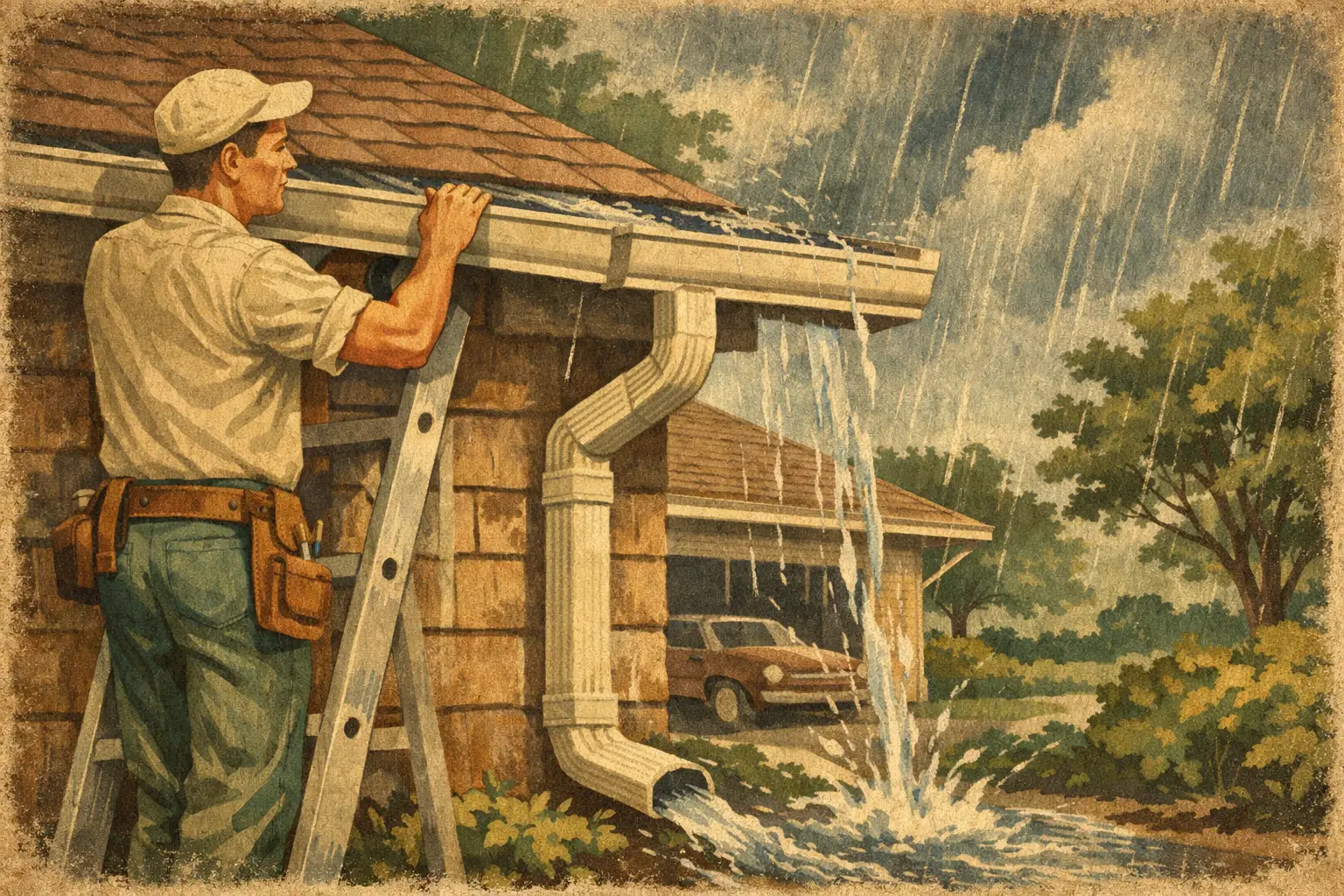
Seamless Gutter Installation That Handles Runoff
Water rarely damages a property all at once. More often, it starts with a drip line that washes out mulch, a downspout that empties too close to the foundation, or a gutter that overflows during a hard Black Hills rain. Professional seamless gutter installation gives that water a controlled path away from the roofline and the building, helping protect the areas that are expensive to repair later.
For homes, rental properties, offices, and commercial buildings around Rapid City, gutters are part of the exterior protection system. They work alongside the roof, siding, fascia, grading, and drainage plan. When one part is undersized, poorly pitched, or neglected, water can find its way where it does not belong.
Why continuous gutters are worth considering
Traditional sectional gutters are assembled from shorter pieces. Every joint is a potential place for debris to collect or for sealant to break down over time. Continuous gutters are formed to the measured length of a roof edge, reducing the number of joints along the run. Fewer joints do not eliminate maintenance, but they can reduce common leak points and create a cleaner appearance.
The value is not only in the gutter itself. A properly designed system collects water at the roof edge, carries it through correctly placed downspouts, and discharges it far enough from the building to avoid concentrating runoff beside the foundation. That matters on a small ranch home and on a larger commercial property where roof area can send a significant volume of water toward entrances, walkways, landscaping, and parking areas.
Local weather adds another layer to the decision. The Black Hills can see heavy rain, fast snowmelt, wind-driven debris, freezing temperatures, and rapid weather changes. Gutters should be selected and installed for the conditions a property actually faces, not just for what looks good from the street.
What a professional seamless gutter installation includes
Good results begin before the first piece of metal is formed. A contractor should inspect the roof edge, fascia condition, existing drainage issues, roof valleys, slopes, access points, and the ground around the property. If fascia is soft or deteriorated, attaching new gutters to it without addressing the problem can lead to a short-lived repair.
Measurements matter because each run is made for the building. The installer forms the gutter on site, then sets it with a deliberate slope toward the downspouts. The slope is subtle enough that the system looks straight from the ground, yet sufficient to move water instead of allowing it to stand inside the channel.
Hangers should be installed at appropriate spacing and secured into solid backing. This is especially important in areas that experience snow loads and winter ice. A gutter can look fine on installation day but pull away later if its fastening system is weak, the spacing is too wide, or it was attached to compromised wood.
Downspouts are equally important. A large roof plane, a valley that concentrates water, or a long gutter run may require more than one downspout. The goal is to prevent water from backing up and spilling over the front edge during a storm. Downspout outlets should also be placed thoughtfully. Sending water directly onto a front walk, beside a basement wall, or into a driveway that freezes is rarely a good long-term plan.
Gutter size and downspout placement are not one-size-fits-all
Many residential properties use 5-inch gutters, while 6-inch gutters may be a better fit for larger roof areas, steep roof pitches, or roof lines that receive concentrated runoff from valleys. Commercial buildings may need a different approach based on roof design, drainage demands, and the placement of doors, loading areas, and pedestrian traffic.
Bigger is not automatically better. An oversized gutter may be unnecessary on a simple roof with modest drainage needs, while an undersized one can overflow even when it is clean. The right choice depends on the roof’s square footage, pitch, layout, and the way water moves across it during a storm.
Downspout placement is also a practical design decision. A contractor should consider where runoff will land after it leaves the system. Extensions, underground drainage, splash blocks, and carefully planned discharge locations can all be useful, depending on the property. The aim is to move water away without creating a new problem for landscaping, sidewalks, neighboring structures, or business access.
Pay attention to roof valleys and problem corners
Roof valleys funnel water from two roof planes into one concentrated stream. During a hard rain or fast thaw, those locations can overwhelm a standard setup if the gutter and downspout are not sized for the demand. Corners near entryways, decks, and landscaped beds also deserve attention because repeated overflow can quickly leave visible damage.
A site inspection helps identify these pressure points. It is easier and more affordable to plan for them during installation than to correct recurring overflow after the fact.
Material, color, and protection options
Aluminum is a common choice for residential gutters because it is lightweight, durable, and available in colors that coordinate with trim and siding. For many property owners, matching the exterior is worthwhile, but performance should come first. The gutter needs the right capacity, slope, support, and drainage path before color becomes the deciding factor.
Gutter covers can help limit leaves, pine needles, and larger debris from entering the channel. They can be a useful addition for properties surrounded by trees, but they are not a promise that gutters will never need attention again. Fine debris can still collect, covers can require cleaning, and a poorly chosen cover can affect how water enters the gutter in heavy rain.
The best choice depends on the tree cover around the building, roof pitch, local weather, and how easily the system can be accessed for service. A straightforward open gutter that is inspected regularly may be the right answer for one property. Another may benefit from professionally selected covers and a maintenance plan.
Installation mistakes that lead to preventable damage
Gutters are often treated as a small add-on after roofing work, but poor installation can create costly drainage issues. The most common problems are usually simple: insufficient slope, too few downspouts, loose hangers, outlets that discharge too close to the building, and gutters attached to damaged fascia.
Another mistake is assuming that gutters alone can solve every water issue. If the soil slopes toward the foundation, if an underground drain is blocked, or if a roof has a leak above the gutter line, a new system will not correct the underlying cause. A responsible exterior contractor looks at the full picture and explains where gutter work ends and where additional repairs may be needed.
For commercial property owners and managers, coordination matters as much as installation quality. Work should be scheduled with attention to tenants, customer access, parking, landscaping, and site safety. Organized crews and a clean job site help reduce disruption while the building remains in use.
Care after installation
Even well-installed continuous gutters need periodic attention. Check them after major storms, during fall leaf drop, and after winter conditions that may leave snow or ice near the roof edge. Look for overflow marks, standing water, loose sections, peeling fascia paint, bent downspouts, or washouts in the landscaping below.
Keep downspout outlets clear and make sure extensions remain pointed away from the building. If water is pooling near the foundation or crossing a walkway, address it before repeated moisture creates a larger issue. Do not attempt to chip ice from gutters with sharp tools or put yourself at risk on a ladder. When the system is difficult to access or damage is visible, professional service is the safer choice.
A reliable gutter system is not flashy, but it does important work every time the weather turns. For Black Hills property owners, the right installation is a practical way to protect the roofline, preserve the exterior, and keep water moving where it belongs – away from the place you have worked hard to maintain.