
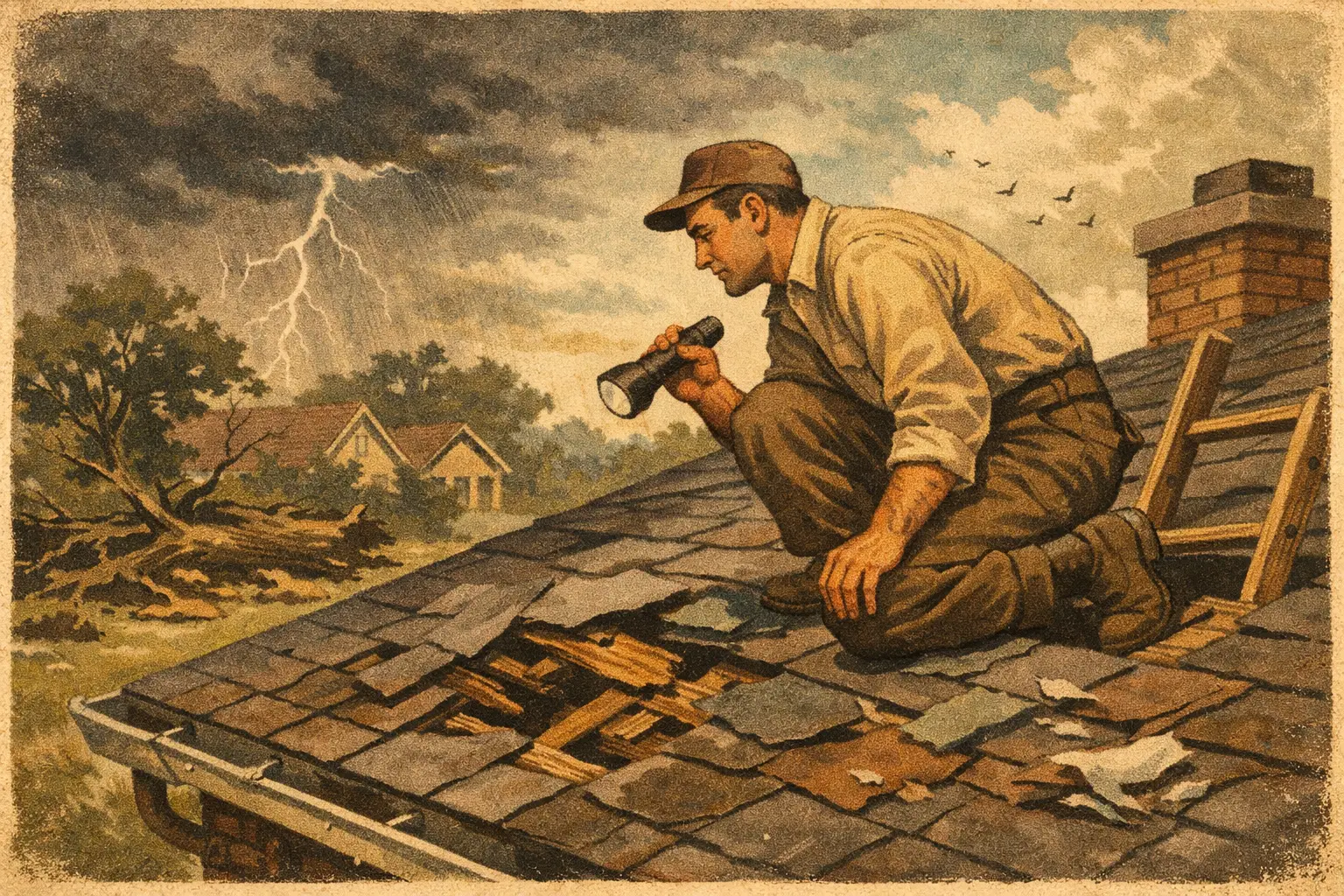
How to Identify Roof Storm Damage Safely
A Black Hills storm can leave a roof looking perfectly normal from the driveway while water is already finding its way beneath the shingles. Hail, high winds, and wind-driven rain do not always create obvious holes, which is why knowing how to identify roof storm damage can help you act before a small issue becomes a costly repair.
The first rule is simple: inspect from the ground whenever possible. A storm-damaged roof may be slippery, structurally weakened, or covered with loose debris. A careful exterior walk-around, followed by an indoor check, can reveal enough information to decide whether a professional roof inspection is needed.
Start With Safety After the Storm
Wait until the storm has fully passed and the area around your property is safe. Stay clear of downed power lines, broken tree limbs, loose siding, and standing water near electrical equipment. If a branch has landed on the roof, do not try to pull it down yourself. Its weight may be holding damaged materials in place, and moving it can make the damage worse.
Use binoculars or a phone camera with zoom to look at upper roof areas. Take photos from several angles, including any debris in the yard, damaged gutters, or visible marks on siding. These photos can help document the condition of the property before repairs begin.
Avoid climbing onto the roof to look for damage. Even experienced homeowners can miss soft spots, lifted shingles, or unstable sections after a storm. A professional roofing contractor has the training and equipment to inspect the roof safely and assess damage without causing more wear to the system.
How to Identify Roof Storm Damage From the Ground
Walk slowly around the full perimeter of your home, business, rental property, or multifamily building. Look for changes that were not there before the storm, especially on the side of the building that faced the strongest wind or hail.
Look for Missing, Lifted, or Creased Shingles
Wind damage often shows up as shingles that are missing, curled, lifted at the edges, or bent sharply along a line. A crease can weaken the shingle even if it settles back into place. Over time, that weakened area may allow water to work underneath the roofing material.
Pay close attention to roof ridges, valleys, edges, and areas around chimneys, vents, skylights, and dormers. These transitions are more exposed to wind pressure and are common places for storm damage to begin.
Granules in the driveway, on the sidewalk, or at the base of downspouts can also be a warning sign. Asphalt shingles use protective granules to shield the underlying material from sun and weather. Some normal granule loss occurs as a roof ages, but a noticeable amount after a storm deserves a closer look.
Check for Hail Evidence Beyond the Roof
Hail damage can be difficult to spot from the ground, but nearby surfaces often tell the story. Look for fresh dents or impact marks on metal gutters, downspouts, roof vents, flashing, window screens, outdoor air-conditioning units, mailbox tops, or metal fences.
Hail may leave dark, round marks on asphalt shingles where granules have been knocked away. It can also create bruised spots that feel soft when inspected by a trained professional. Not every mark means the roof needs replacement. The size of the hail, the roof’s age, the slope, and the condition of the shingles all matter. Still, if other exterior surfaces show clear hail strikes, it is wise to have the roof evaluated.
Inspect Gutters and Drainage Areas
Your gutter system is often the first exterior component to show storm-related trouble. Look for gutters pulling away from the fascia, bent sections, loose hangers, cracked seams, or downspouts that have shifted out of place.
After heavy rain, watch how water moves around the building. Overflowing gutters, water pouring behind the gutter, or pools near the foundation can point to a blockage or storm damage. Even if the roof itself is intact, failed drainage can lead to fascia rot, siding damage, foundation moisture, and ice concerns during South Dakota winters.
Watch for Debris and Branch Damage
Tree limbs can scrape shingles, puncture roofing materials, damage flashing, or clog gutters. Smaller branches may seem harmless, but they can trap moisture and hide damage beneath them. If debris is accessible from the ground, clear it away carefully. If it is on the roof, near power lines, or tangled in gutters above a ladder-safe height, leave removal to a qualified professional.
Check Inside for Signs Water Got Through
Exterior damage does not always lead to an immediate leak. Water can travel along roof decking, rafters, insulation, wiring, or wall cavities before it becomes visible inside. A quick indoor inspection after a major storm is worth the time.
Start in the attic if it is safe and accessible. Use a flashlight and look for damp insulation, wet wood, dark staining, drips, mold-like growth, or daylight coming through the roof deck. Do not step on exposed ceiling drywall from above, and avoid touching wet electrical wiring.
Inside the living or working areas, check ceilings, upper walls, window trim, and around light fixtures for water spots, peeling paint, bubbling drywall, or a musty odor. A new stain may be small, but it should not be ignored. Take a photo and note the date, then arrange an inspection before the next round of rain or snow adds more moisture.
For commercial properties, inspect ceiling tiles, mechanical rooms, inventory areas, and spaces below rooftop equipment. A small leak above a retail floor, office server room, or apartment hallway can create safety concerns and operational disruption quickly.
Separate Cosmetic Damage From Functional Damage
Not all storm marks affect roof performance in the same way. A dented gutter may be mostly cosmetic, while lifted shingles or damaged flashing can compromise the roof’s ability to shed water. The challenge is that functional damage is not always visible without a close inspection.
Age matters, too. A newer roof may withstand a storm with minor roof repairs, while an older roof with brittle shingles may need more extensive work after the same weather event. Roof type also changes the evaluation. Asphalt shingles, metal roofing, low-slope commercial systems, and tile or specialty materials respond differently to hail, wind, and debris.
A reputable contractor should explain what they found, identify whether the issue is repairable, and provide clear recommendations based on the roof’s actual condition. Be cautious of anyone who promises a full replacement before inspecting the property or pressures you to sign paperwork immediately after a storm.
Document Damage Before Making Temporary Repairs
If water is entering the property, protecting the interior comes first. Move furniture, electronics, inventory, and valuables away from the affected area. Use containers to catch drips where safe, and document the leak before covering or cleaning the area.
Take wide photos that show the location of the damage and closer photos of stains, broken materials, hail marks, or debris. Record the date of the storm and save any weather alerts or hail reports you received. If you need emergency tarping or another temporary measure, keep receipts and photographs of the work.
Temporary repairs can limit additional water damage, but they are not a substitute for a full inspection. Tarping must be secured correctly to avoid further shingle damage or wind hazards. When in doubt, call a roofing professional rather than attempting a roof-level repair yourself.
When to Schedule a Professional Inspection
Arrange a professional inspection promptly if you see missing shingles, exposed roof decking, active leaks, hail dents on exterior metal, sagging roof areas, damaged flashing, or a branch strike. You should also call after a severe storm if your neighbors have confirmed roof damage, even when your roof appears normal from the ground.
For Rapid City and Black Hills property owners, timing matters. Weather conditions can change quickly, and damage that seems manageable in mild conditions may worsen under snow, freeze-thaw cycles, or the next high-wind event. A timely inspection gives you a clearer picture of what needs attention and helps protect the long-term value of your property.
Good Guys Exteriors approaches storm-related concerns with the same practical focus we bring to every roofing project: assess the condition carefully, communicate clearly, and recommend work that protects the building. Whether the answer is a targeted repair, gutter correction, or a larger roofing plan, the goal is a dependable exterior and a clean, organized job site.
After a storm, trust what you can safely see, document what has changed, and do not wait for a ceiling stain to tell you there is a problem. If you are concerned about damage, schedule a storm damage roof inspection with Good Guys Exteriors.