
Why Gutters Overflow During Rain and What Helps
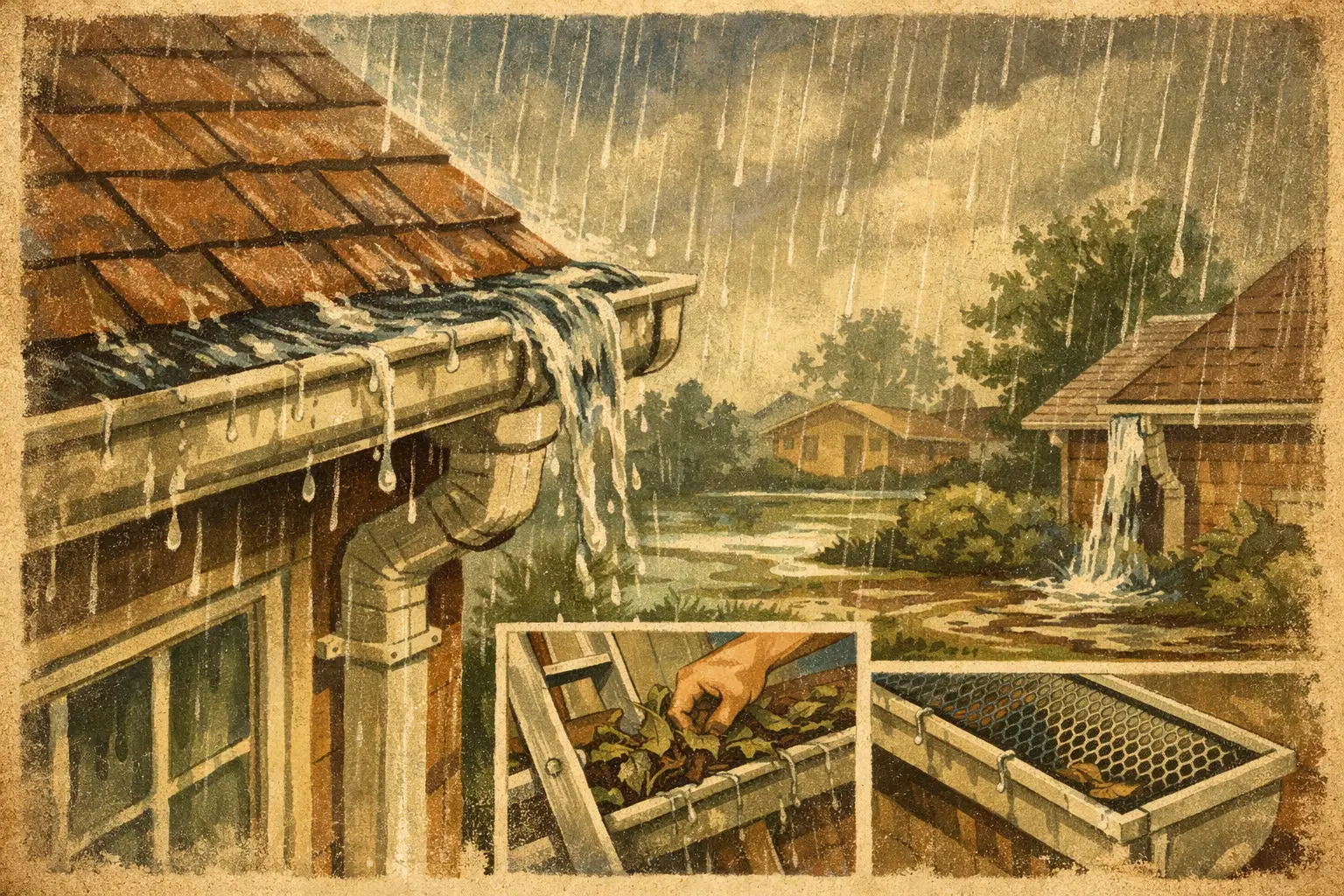
A gutter spilling over its front edge during a Black Hills downpour is more than an annoyance. It sends water where it was never meant to go: against siding, around windows, onto walkways, and down beside the foundation. Understanding why gutters overflow during rain can help you address a small drainage problem before it becomes a repair to your roof, siding, or property structure.
Why Gutters Overflow During Rain
Most gutter overflows come down to one issue: water is arriving faster than the system can collect and move it away. Sometimes the cause is a simple buildup of leaves. Other times, the gutter itself is improperly pitched, undersized for the roof, or connected to a downspout that cannot keep up.
Heavy rain can expose a weak point that stays hidden during lighter showers. That is why a gutter system may appear fine for much of the year, then suddenly pour water over the edge during one strong storm. The right solution depends on where the water is escaping and what is restricting its path.
Leaves, needles, and roof grit block the flow
Debris is the most common cause of overflow. Leaves, pine needles, seed pods, shingle granules, and small twigs settle in the gutter channel. They collect near downspout openings, where even a modest clog can slow the entire system.
In the Rapid City and Black Hills area, wind can move debris quickly across a roof and into open gutters. Pine needles are especially troublesome because they can form a dense mat that still lets some water through, making the blockage less obvious from the ground. Water then backs up until it spills over the front or rear edge of the gutter.
A downspout may be clogged even when the gutter looks mostly clear. If water pools around the outlet, trickles from the top of the downspout, or comes out slowly at the bottom during rain, the obstruction may be inside the downspout or at the elbow near grade.
The gutter slope is wrong
Gutters need a gradual slope toward each downspout. The change is subtle, but it matters. If a gutter is level, sagging in the middle, or sloping away from the outlet, water stays in the channel rather than draining.
Standing water also adds weight. Over time, that weight can pull fasteners loose and worsen the sag. A gutter that once drained adequately may eventually develop a low spot that holds water, collects debris, and overflows during hard rain.
The system is too small for the roof or rainfall
A large or steep roof sheds water quickly. When that water is funneled into a short section of gutter, the volume can overwhelm a standard-size system. Valleys create an even bigger challenge because they concentrate runoff from two roof planes into one area.
This does not always mean the whole gutter system needs replacement. A contractor may be able to improve performance by adding a larger downspout, creating another drainage point, or using a wider gutter in the area receiving the heaviest flow. The best option depends on roof layout, runoff patterns, and the condition of the existing materials.
Water is overshooting the gutter
Overflow is not always a clog. Rainwater can run so quickly off the roof that it shoots past the gutter, particularly in valleys or on metal roofing. This may look like a gutter failure, but the water may not be entering the gutter at all.
A drip edge helps guide roof runoff into the gutter. If it is missing, damaged, or installed incorrectly, water can run behind the gutter instead. That can stain fascia boards, rot wood trim, and create moisture issues that are easy to miss until the damage is advanced.
Loose, damaged, or poorly installed gutters cannot carry water correctly
A gutter that has pulled away from the fascia may tip outward and lose its proper slope. Bent sections, separated seams, leaking end caps, and damaged hangers can all disrupt drainage. Ice, snow load, wind, and age can contribute to these issues, especially when the system has already been carrying excess debris and standing water.
Seam leaks do not usually cause a dramatic waterfall over the front edge, but they can still place water against siding or directly beside the foundation. If you see drips at a joint long after a storm, the gutter likely needs repair or replacement at that section.
Where Overflowing Water Can Cause Damage
Gutters protect more than the roof edge. They help control where thousands of gallons of rainwater go over the course of a season. When that control is lost, the water often affects the parts of a building that are most expensive and disruptive to repair.
Repeated overflow can saturate soil near the foundation. In some cases, that contributes to moisture intrusion, shifting soils, erosion, or water in a basement or crawl space. It can also wash out landscaping and leave ruts where water repeatedly falls from the roofline.
At the roof edge, backed-up water can wet fascia boards and soffits. Wood rot may spread behind the gutter before it is visible from below. Water running down exterior walls can stain siding, worsen loose caulking around windows, and create slippery conditions at doors, patios, and sidewalks.
For commercial properties, gutter overflow can also create a maintenance and safety concern near customer entrances, loading areas, and pedestrian routes. The goal is not merely to stop the visible spill. It is to direct water safely away from the building and areas where people walk.
How to Tell What Is Causing the Problem
Watch the gutter during a steady rain only if you can do so safely from the ground. Note whether water is spilling over one localized area, across a long section, from behind the gutter, or at a roof valley. Each pattern points toward a different issue.
Water spilling at one spot often suggests debris, a low area, or a blocked downspout. Overflow along the full length of a gutter may indicate that the downspout is clogged or undersized. Water pouring behind the gutter can point to a drip-edge issue, loose attachment, or deteriorated fascia.
After the rain stops, look for standing water, visible debris, sagging sections, loose brackets, rust, separated joints, and downspout extensions that have disconnected. Do not climb a ladder in wet conditions or attempt roof-level inspection without the proper equipment. A clear view from the ground can help identify the urgency, while a professional inspection can determine the actual repair needed.
When Cleaning Is Enough and When It Is Not
If the gutters are structurally sound and the problem is a fresh accumulation of debris, thorough cleaning may restore normal flow. The downspouts need attention as well. Clearing only the open gutter channel does little good if the outlet remains blocked.
Cleaning will not correct a sagging gutter, poor slope, inadequate capacity, or water that misses the gutter at the roof edge. In those cases, repeated cleanouts become a temporary routine rather than a real fix. A repair may involve rehanging and pitching the gutter, replacing damaged sections, sealing joints, adjusting drainage, or installing a system sized for the building’s runoff.
Gutter guards can reduce maintenance, but they are not a cure for every problem. Their performance varies with the type of debris around the property, roof pitch, and guard design. Fine pine needles and roof grit can still accumulate, and guards do not solve an improperly sloped or undersized gutter. A good installation starts with a functioning gutter system, then considers whether guards make sense for the property.
Steps That Help Prevent the Next Overflow
Regular maintenance is the simplest line of defense. Gutters should be checked after major storms and cleaned as needed, particularly after heavy leaf drop or wind events. Properties with mature trees or nearby pines may need more frequent service than an open lot.
Keep downspout outlets clear and make sure extensions carry water away from the foundation. Check that splash blocks have not shifted and that landscaping has not created a barrier where water should drain. If you notice overflow near a roof valley, staining behind gutters, or recurring pooling around the building, schedule an evaluation before the next round of severe weather.
Good Guys Exteriors helps Black Hills property owners assess gutter performance as part of a practical approach to roof and exterior protection. A properly installed, well-maintained gutter system keeps rainwater moving where it belongs and gives you one less concern when the forecast turns wet.
The next time a storm sends water over the gutter edge, treat it as a useful warning rather than something to put off. A timely inspection can protect the roofline, foundation, landscaping, and walkways that make your property safe and dependable every day.