
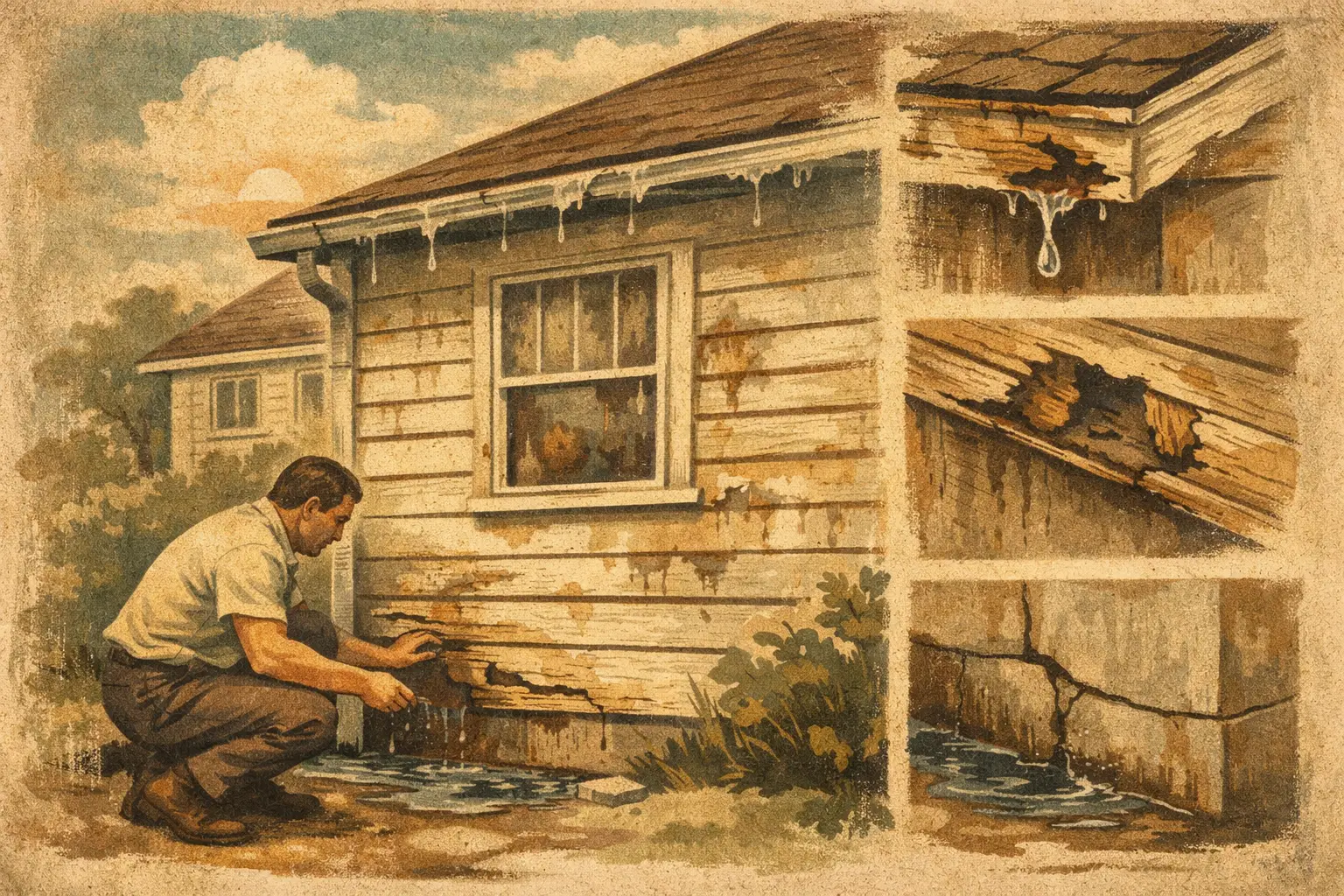
7 Signs of Siding Water Damage to Catch Early
Water does not always announce itself with a ceiling stain or a puddle on the floor. Often, the earliest signs of siding water damage are small changes outside your home or commercial property: a loose panel, a dark streak, peeling paint, or a section that no longer sits flat. In Rapid City and across the Black Hills, catching those changes early can help prevent a manageable exterior repair from becoming damaged sheathing, mold growth, or interior water intrusion.
Siding is a protective layer, but it is only one part of a working exterior system. Flashing, trim, caulk, gutters, downspouts, roof edges, and the drainage plane behind the siding all need to direct water away from the building. When one part fails, moisture may find a path behind the panels.
1. Warped, Buckled, or Loose Siding Panels
Siding that looks wavy, bowed, or pulled away from the wall deserves a closer look. Wood siding may cup or swell after repeated moisture exposure. Vinyl may appear distorted when water has reached the wall assembly behind it, although improper installation and extreme heat can also cause warping. Fiber cement can soften or separate at vulnerable edges if it has been repeatedly exposed to water.
A panel that has come loose is not always proof of hidden water damage. High winds, loose fasteners, or an impact can be the cause. Still, an opening in the siding gives rain, snowmelt, and wind-driven moisture a direct route where it does not belong. It should be repaired before the next storm tests the wall.
2. Soft Spots, Swelling, or Crumbling Material
Press gently along siding near windows, doors, corners, and the bottom edge of exterior walls. Healthy siding and trim should feel firm. A soft or spongy area can indicate that water has affected the material underneath, including wood sheathing or framing.
Swollen wood trim, crumbling engineered-wood siding, and edges that flake apart are especially concerning. These symptoms usually develop over time, which means moisture may have been present through more than one season. A professional inspection can determine whether the issue is isolated to trim or extends behind the siding.
3. Peeling Paint, Blisters, and Stained Exterior Walls
Paint is often the first finish to reveal a moisture problem. When water gets behind painted wood siding or trim, paint can bubble, blister, crack, or peel away. You may also see irregular dark stains, rust-colored streaks below fasteners, or white mineral residue left behind as moisture evaporates.
Not every paint failure is a water problem. Age, sun exposure, and poor surface preparation can all shorten the life of a paint job. The difference is usually location. Paint deterioration around window trim, roof-to-wall intersections, gutter areas, and lower wall sections points more strongly to water management issues.
4. Mold, Mildew, or Persistent Green Growth
A little surface mildew on a shaded side of a building can be common, particularly where trees limit sunlight. However, recurring black spotting, green algae, or mildew that returns soon after cleaning may signal that the area stays wet too long.
Look closely at siding beneath roof valleys, near overflowing gutters, around hose bibs, and behind landscaping that traps moisture against the wall. Mold or mildew on the interior side of an exterior wall is more urgent. Musty odors, discolored drywall, or visible interior growth can mean water has moved beyond the siding and into the building envelope.
5. Failed Caulk Around Windows, Doors, and Trim
Caulk is a small detail with a large job. It seals joints where siding meets trim, windows, doors, utility penetrations, and other transitions. When caulk cracks, shrinks, pulls away, or goes missing, water can enter through narrow gaps during rain or blowing snow.
Caulk does not last forever, especially in the Black Hills, where temperature swings can make exterior materials expand and contract. Recaulking a sound joint can be straightforward maintenance. But if a gap has been open for a long time and the surrounding trim feels soft or looks swollen, the repair may require more than new sealant.
6. Watermarks or Damage Inside the Building
Exterior water problems sometimes show up indoors well after rain has stopped. Watch for stains on walls or ceilings near windows, peeling interior paint, swollen baseboards, damp carpet along an outside wall, or a persistent musty smell.
These symptoms do not automatically mean the siding is at fault. A leaking roof, damaged window, plumbing issue, ice dam, or poor flashing can create similar evidence. That is why a complete exterior inspection matters. The goal is not to cover the symptom but to identify where water is entering and correct the path it is taking.
7. Gutter Overflow and Splashing at the Foundation
Your gutters play a major role in protecting your siding. If gutters overflow during a normal rain, water can run down the exterior wall and soak the siding, trim, and ground below. Downspouts that discharge too close to the building can keep the lower wall and foundation area wet long after a storm.
Pay attention to dirt streaks on siding beneath gutters, washed-out mulch, splashing against lower panels, and ice buildup near downspout outlets in winter. These are drainage warnings, not just appearance issues. Cleaning gutters, correcting their slope, repairing leaks, and extending downspouts can protect both the siding and the structure below it.
Where Siding Water Damage Usually Starts
Water rarely enters through the middle of a properly installed siding panel. It is more likely to get in at transitions and details. Roof-to-wall intersections, chimneys, windows, doors, deck attachments, exterior light fixtures, and utility lines all need proper flashing and sealing.
The bottom edge of siding is another common trouble spot. Siding installed too close to soil, mulch, patios, or roof surfaces can wick moisture or receive constant splashback. Landscaping can create problems, too. Dense shrubs against the wall limit drying and make it difficult to notice early damage.
Older properties may have several layers of repairs from different years. A newer window, for example, can still leak if flashing and trim integration were not handled correctly. The visible siding may look acceptable while water works behind it.
What to Do When You Notice Siding Water Damage
Start by documenting what you see. Take clear photos after rain, note where stains appear, and look for connections between the damage and a gutter, window, roof edge, or downspout. Avoid aggressively pulling on panels or probing deeply into soft areas, since that can enlarge the damage.
Next, address active water sources if they are obvious. Clear a clogged gutter, redirect a downspout, remove wet leaves from against the wall, or keep sprinklers from spraying the siding. These steps can reduce additional exposure, but they will not repair damage already behind the wall.
A qualified exterior contractor can inspect the siding, trim, roof edges, gutters, flashing, and drainage patterns as one system. Depending on the findings, the right fix may be a targeted trim repair and reseal, replacement of damaged siding sections, gutter correction, or a larger repair to restore the wall assembly. The scope depends on how long water has been present and whether sheathing or framing has been affected.
Protecting Your Property Through Black Hills Weather
The Black Hills can put exterior systems through heavy rain, snow, ice, wind, and fast temperature changes in the same year. A practical maintenance check each spring and fall can catch many problems before they spread. Walk around the property, look for loose or stained siding, check that gutters are clear and secure, and make sure downspouts move water away from the building.
Good Guys Exteriors approaches siding, roofing, and gutters as connected systems because water does not respect service categories. A small drainage problem at the roofline can become a siding issue, and a siding gap can become an interior repair. Addressing the early signs keeps your property safer, preserves curb appeal, and helps protect the investment you have worked hard to build.
When an exterior wall looks different, feels soft, or stays damp longer than it should, trust that observation. A timely inspection can provide clarity and give you a practical path forward before the next round of weather has a chance to make the problem larger.