
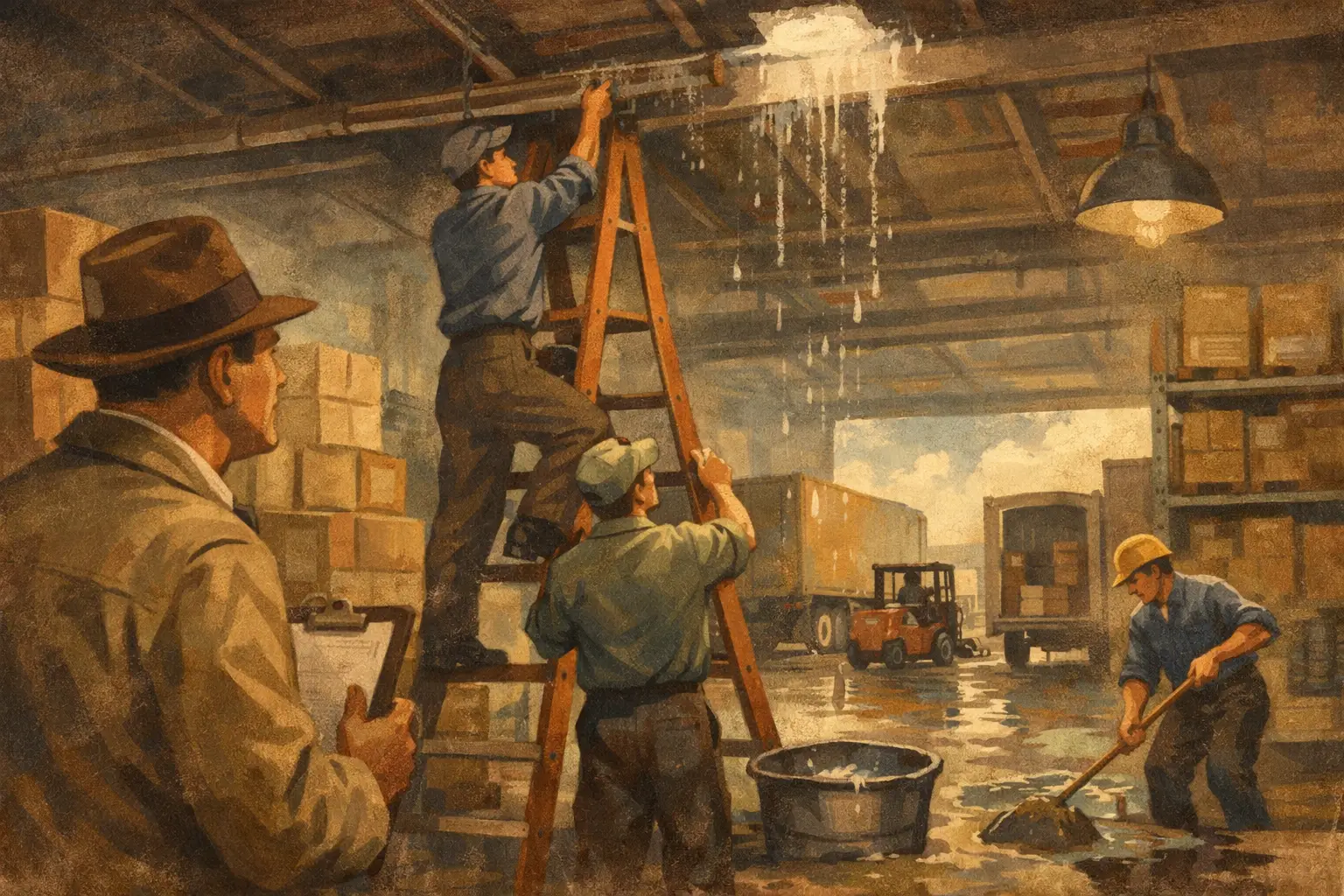
Warehouse Leak Resolution That Protects Operations
A warehouse roof leak rarely stays a roof problem. Water can reach stored inventory, electrical equipment, racking, insulation, ceilings, and occupied work areas long before it is visible on the floor. Effective warehouse leak resolution starts with protecting people and operations, then finding the actual source of water instead of simply covering the stain.
For warehouse owners, facility managers, and commercial tenants in Rapid City and the Black Hills, timing matters. A small opening in a commercial roof can worsen quickly after wind, hail, heavy rain, snow buildup, or repeated freeze-thaw cycles. The right response limits immediate damage while setting the building up for a lasting repair.
Start by protecting people, inventory, and equipment
When water enters a warehouse, the first priority is safety. Keep employees away from wet areas, especially where water may be near lighting, electrical panels, machinery, or extension cords. Place caution signs around the affected area and move inventory, equipment, and records out of the water path when it can be done safely.
Containers can catch active drips, but they are only a temporary control measure. If water is pooling above a ceiling or visibly sagging a ceiling surface, do not attempt to drain it without professional guidance. Wet ceiling materials can fail unexpectedly, and the water may be carrying debris from the roof assembly.
Document the damage as soon as conditions are safe. Photos of the interior leak, affected materials, roof conditions, and any damaged inventory help create a clear maintenance record. They can also be useful when discussing repairs with a property owner, insurer, or tenant.
Why warehouse leaks are difficult to trace
The drip inside a building is often not directly below the roof opening. Water can travel along roof decking, insulation, structural members, mechanical penetrations, or walls before it reaches an opening where it becomes visible. That is why sealing the spot above a water stain can sometimes stop the symptom briefly without solving the cause.
Commercial warehouse roofs also have more potential leak points than many property owners realize. Open seams in membrane roofing, punctures from rooftop traffic, failed flashing around vents and HVAC curbs, clogged drains, damaged edge metal, and aging sealant can all allow water into the building. On metal roofing, loose fasteners, deteriorated washers, separated laps, and compromised penetrations are common concerns.
Weather can make diagnosis more complicated. A leak that appears only during wind-driven rain may be tied to wall flashing or a roof edge rather than the main roof field. Water showing up after snow begins to melt may point to drainage problems, ice buildup, or a weak detail that is exposed during freeze-thaw conditions.
A practical approach to warehouse leak resolution
A professional roof inspection should begin with the interior evidence and work outward. The inspector can identify the leak area, examine the roof surface and penetrations, check drainage paths, and look for signs of trapped moisture or deteriorated materials. The goal is not just to find a hole. It is to understand why that section of the roof allowed water through.
For an active leak, a temporary repair may be the responsible first step. This can include securing a damaged area, sealing an open seam, addressing a compromised flashing detail, or covering an exposed section until weather allows permanent work. A temporary repair is valuable when it protects the building, but it should not be mistaken for a long-term solution if the roof system underneath has broader wear.
The permanent repair depends on the roof type, condition, age, and scope of damage. A localized puncture on an otherwise sound membrane roof may only need a properly prepared patch. Failed flashing around a rooftop unit may require replacement of the affected detail and adjacent roofing material. If moisture has spread through insulation or multiple areas are failing, a larger restoration or replacement plan may make better financial sense.
This is where clear communication matters. Property owners deserve to know whether they are dealing with a targeted repair, a maintenance concern, or a roof nearing the end of its useful service life. The lowest immediate price is not always the lowest cost over time, particularly when recurring leaks threaten inventory or interrupt operations.
Drainage is part of the repair
Many warehouse leaks begin or worsen because water is not leaving the roof as designed. Flat and low-slope commercial roofs depend on properly functioning drains, scuppers, gutters, downspouts, and roof slope to move water away from the building. When debris blocks drainage points, water can pond and place extra stress on seams, flashing, and roof materials.
A repair plan should include an evaluation of where the water goes after it lands on the roof. If gutters are undersized, downspouts discharge too close to the structure, or scuppers repeatedly clog, fixing the leak alone may leave the original problem in place. Exterior drainage work can be a practical part of protecting the roof, walls, foundation, and surrounding pavement.
In the Black Hills, winter conditions deserve special attention. Snow accumulation and ice can slow drainage, while temperature swings can open small gaps in aging materials. Regular seasonal inspections help identify blocked drainage, loose metal, cracked sealant, and other issues before the next storm turns them into an interior water event.
When a repair is enough and when replacement makes sense
Not every warehouse leak calls for a new roof. A focused repair is often the right answer when the roof is in generally good condition, the leak has a clear cause, and the affected area is limited. Prompt repair can preserve the remaining life of a roof system and prevent a minor issue from spreading.
Replacement becomes worth discussing when leaks are recurring, repairs are appearing in several locations, insulation is saturated, or the roof has reached the end of its expected service life. Building use also matters. A warehouse storing sensitive products, operating around the clock, or housing expensive equipment may need a more proactive solution than a lightly used storage building.
A good contractor will not push replacement before understanding the roof’s condition. At the same time, an honest assessment should not minimize widespread deterioration just because a patch can slow the current leak. The right decision balances the roof’s remaining life, repair history, business risk, budget, and the disruption involved in scheduling larger work.
Reduce disruption while repairs are underway
Commercial roofing work should be organized around the building’s daily needs. Before work begins, establish where crews will access the roof, where materials can be staged, and which areas below need protection. If the warehouse has loading docks, customer traffic, forklift routes, or employee parking nearby, those details should be part of the plan.
Clear communication helps operations continue safely. Building managers should know when work will occur, whether noise or access changes are expected, and who to contact if conditions change. Clean job sites matter too. Loose materials, nails, and debris do not belong around an active warehouse.
Good Guys Exteriors approaches commercial exterior work with the same local accountability that property owners expect from a long-term partner. That means careful assessment, straightforward recommendations, organized work areas, and repairs focused on protecting the building rather than creating more disruption.
Build leak prevention into routine maintenance
The best time to address a warehouse roof issue is before water reaches the floor. A regular inspection schedule can catch early warning signs such as open seams, cracked sealant, deteriorated flashing, punctures, ponding water, loose edge metal, and drainage obstructions. Inspections are especially useful after hail, high winds, heavy snow, or major temperature swings.
Facility teams can also support roof performance between professional visits. Keep roof access controlled, avoid unnecessary foot traffic, report interior stains right away, and make sure drains and gutters are not ignored during routine exterior upkeep. Even a small stain deserves attention because it may be the first visible sign of a larger moisture problem.
A warehouse is built to keep products moving and people working. When water finds a way inside, acting quickly and choosing a repair based on the real cause can protect far more than the roof. A careful inspection now can spare your operation from a much larger interruption later.