
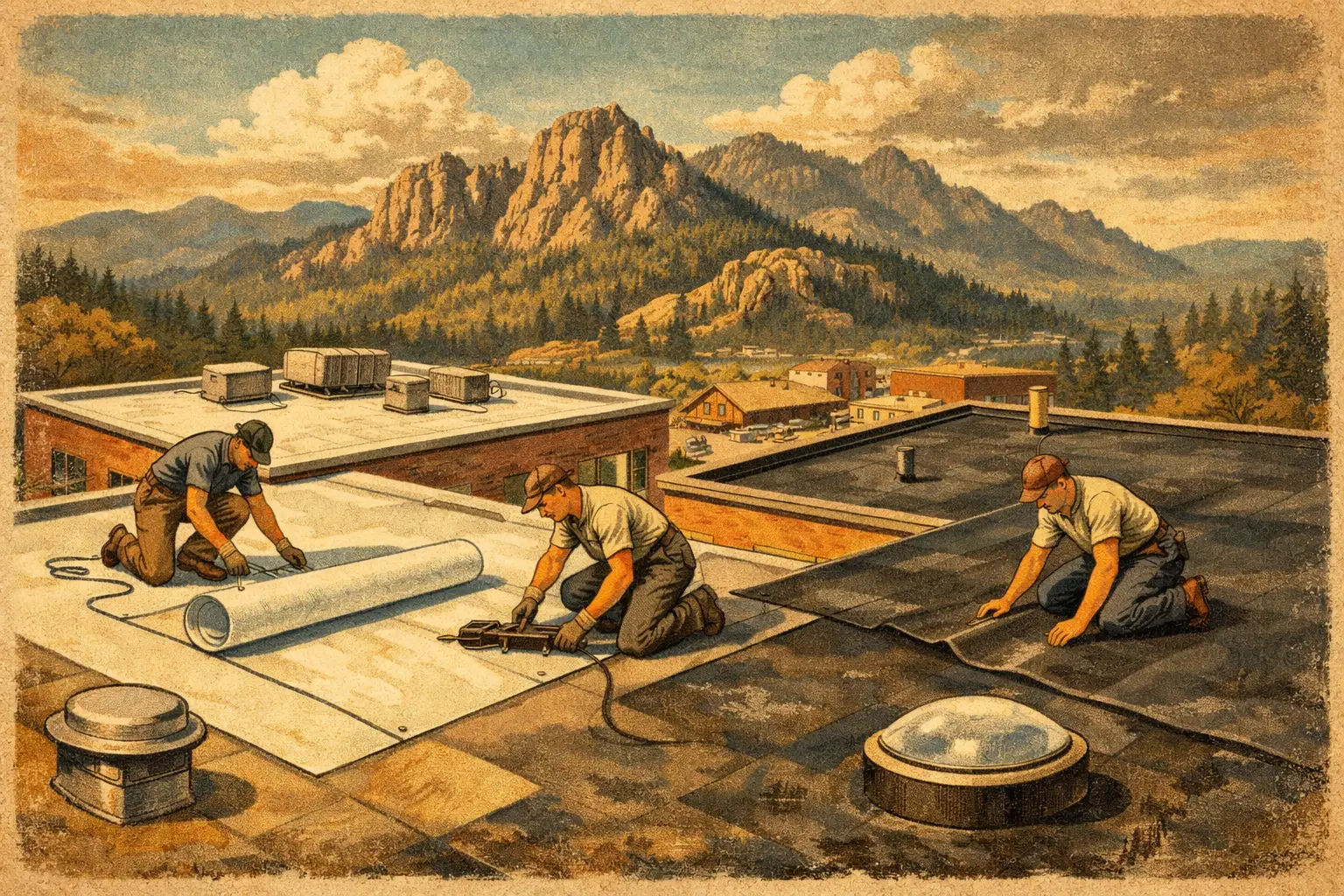
TPO Versus EPDM Roofing for Black Hills Buildings
A low-slope roof that looks fine from the ground can still be one hard rain, wind event, or seam failure away from a costly leak. When choosing TPO versus EPDM roofing, the right answer comes down to your building, budget, roof design, and the weather conditions it must handle in Rapid City and across the Black Hills.
Both systems are proven single-ply membranes used on commercial buildings, multifamily properties, garages, additions, and certain residential low-slope roof sections. Each can provide dependable protection when it is properly designed and installed. The differences are in how they manage sunlight, temperature swings, seams, repairs, and long-term maintenance.
What TPO and EPDM Roofs Have in Common
TPO and EPDM are both single-ply roofing systems. That means the waterproof layer is a flexible membrane rather than a built-up roof made from multiple layers of asphalt and felt. Both are commonly installed over insulation and attached with adhesives, fasteners, or a combination of methods appropriate for the roof deck and wind requirements.
They work best on roofs with little slope, where shingles are not a practical choice. A commercial office, retail building, apartment building, shop, or home addition with a nearly flat roof may be a good candidate for either material.
Neither system should be selected based on material alone. Drainage, insulation, flashing details, rooftop equipment, edge metal, and the condition of the existing deck all affect whether a roof performs well. Even the best membrane can fail early if water ponds around drains or transitions are not properly sealed.
TPO Versus EPDM Roofing: The Main Differences
TPO, short for thermoplastic polyolefin, is typically white or light-colored. Its seams are joined with hot air welding, creating a bonded connection that is often stronger than the membrane itself when completed correctly. EPDM, or ethylene propylene diene monomer, is a synthetic rubber membrane that has long been used on low-slope roofs. It is commonly black, although white EPDM options are also available. Its seams are generally sealed with specialized tapes and adhesives.
The most visible difference is color. A white TPO roof reflects more sunlight than a standard black EPDM roof. That can help reduce heat absorption during sunny weather and may lower cooling demands in some buildings. For an air-conditioned commercial space with substantial roof exposure, that reflectivity can be a meaningful advantage.
Black EPDM absorbs more solar heat, which can be less favorable during hot periods but may offer a modest winter benefit in certain conditions. In the Black Hills, however, insulation values, building use, air leaks, and roof design generally matter more to annual energy performance than membrane color alone.
Seam construction is another major distinction. TPO’s welded seams can provide excellent water resistance, especially on a roof with many penetrations or a large open field. EPDM seam tape technology has improved significantly and performs well when the surface is properly prepared and the tape is applied under the right conditions. The installation crew’s experience matters greatly with either system.
When TPO May Be the Better Fit
TPO is often chosen for commercial properties that need a bright, reflective roof surface and strong welded seams. It is a practical option for offices, retail locations, warehouses, and multifamily buildings with broad low-slope roof areas.
A property owner may lean toward TPO when summer heat gain is a concern, when a roof has many HVAC curbs and pipe penetrations, or when a white roof better suits the building’s energy goals. Welded repairs can also be a benefit. When compatible material is available and the roof is clean and dry, a trained roofing crew can often heat-weld patches and details into the existing membrane.
TPO does require careful product selection. Material formulations and manufacturing quality have varied over the years, so it is wise to consider the membrane thickness, manufacturer warranty requirements, fastening pattern, and the contractor’s installation method. A lower initial price is not much of a savings if it results in a thin membrane or insufficient attention to perimeter and flashing details.
In a region known for wind, hail, snow, and sudden temperature changes, the full roofing assembly matters. The membrane must be attached correctly, and insulation must be secured and tapered where needed to direct water toward drains or scuppers.
When EPDM May Be the Better Fit
EPDM has a long track record on low-slope roofs and remains a dependable choice for many property types. Its rubber-like flexibility is a significant advantage. The membrane handles thermal movement well, which can be valuable when temperatures shift quickly between a warm afternoon and a cold night.
For a building with a straightforward roof layout, EPDM can be a cost-effective system with reliable long-term performance. It is commonly used on commercial buildings, apartment structures, garages, and residential low-slope areas where a durable waterproof surface is needed.
EPDM is also familiar to many experienced roofing professionals, and repairs can often be completed effectively using compatible primers, tapes, and patches. That said, clean preparation is essential. Dust, moisture, aged oxidation, or poor surface prep can compromise a taped repair or seam.
A black EPDM roof may not be the first choice for a building trying to reduce summer rooftop heat. Still, it can make sense when flexibility, proven performance, budget, and the specific roof configuration are the higher priorities. White EPDM may provide a middle ground for owners who prefer EPDM’s characteristics but want more reflectivity.
Durability in Black Hills Weather
No roof membrane is hail-proof. TPO and EPDM can both sustain damage from large hail, sharp debris, or repeated foot traffic around rooftop equipment. Protective walkway pads should be installed where technicians regularly access HVAC units, and roof inspections after a significant hailstorm can identify punctures before they become interior leaks.
EPDM is known for its flexibility in cold weather. TPO can also perform well in cold climates, but installation conditions and workmanship are especially important. Properly welding TPO seams requires the correct equipment settings and trained installers who can verify seam quality. Adhesives and tapes used with EPDM also have temperature and surface-condition requirements.
Wind resistance depends less on whether the roof is TPO or EPDM and more on the engineered attachment plan. Roof edges, corners, and areas around penetrations experience greater wind pressure. Fastener spacing, adhesive coverage, termination details, and edge metal all need to meet the demands of the building and location.
Snow is another consideration. A membrane roof should shed water effectively once snow melts. If a roof has low spots, clogged drains, or poor slope, standing water can shorten the service life of either system. Correcting drainage during replacement is often one of the most valuable parts of the project.
Cost, Service Life, and Maintenance
Material pricing changes, so there is no honest one-size-fits-all answer on whether TPO or EPDM always costs less. The installed price depends on roof size, access, tear-off needs, insulation, deck repairs, drains, penetrations, parapet walls, and the chosen membrane thickness. A simple roof with open access will cost far less per square foot than a roof crowded with equipment and complicated flashing details.
Both TPO and EPDM can provide many years of service with quality materials, professional installation, and regular maintenance. A roof warranty is valuable, but it should not replace a clear understanding of what the warranty covers, who performs maintenance, and whether damage from hail, wind, ponding water, or unauthorized roof traffic is excluded.
Plan for periodic inspections, particularly after severe weather. Remove debris from drains and scuppers, watch for loose edge metal, and address punctures or open seams promptly. Small repairs are far more manageable than water damage that reaches insulation, decking, ceilings, or electrical systems.
How to Choose the Right Low-Slope Roofing System
Start with the building’s needs rather than a preferred material. Consider how the building is used, whether cooling costs are a priority, how much rooftop traffic occurs, and whether the existing roof has drainage issues. A roof inspection should also identify wet insulation, deteriorated decking, failed flashing, and conditions hidden beneath the current membrane.
TPO may be the better match for an owner who wants a reflective surface and heat-welded seams. EPDM may be the better match for an owner who values its long history, cold-weather flexibility, and proven repair methods. In either case, the roof should be designed as a complete system, not just selected from a material sample.
For property owners in Rapid City and the Black Hills, a local contractor can assess the roof after looking at its actual drainage, exposure, equipment, and condition. Good Guys Exteriors approaches low-slope roofing decisions with the same practical standard used on every project: recommend the system that protects the property, fits the work required, and is installed with care from the first detail to final cleanup.
The best time to compare roofing options is before a small concern becomes an active leak. A thorough inspection gives you the information to make a confident decision while there is still time to plan the work around your property, tenants, customers, and budget.