
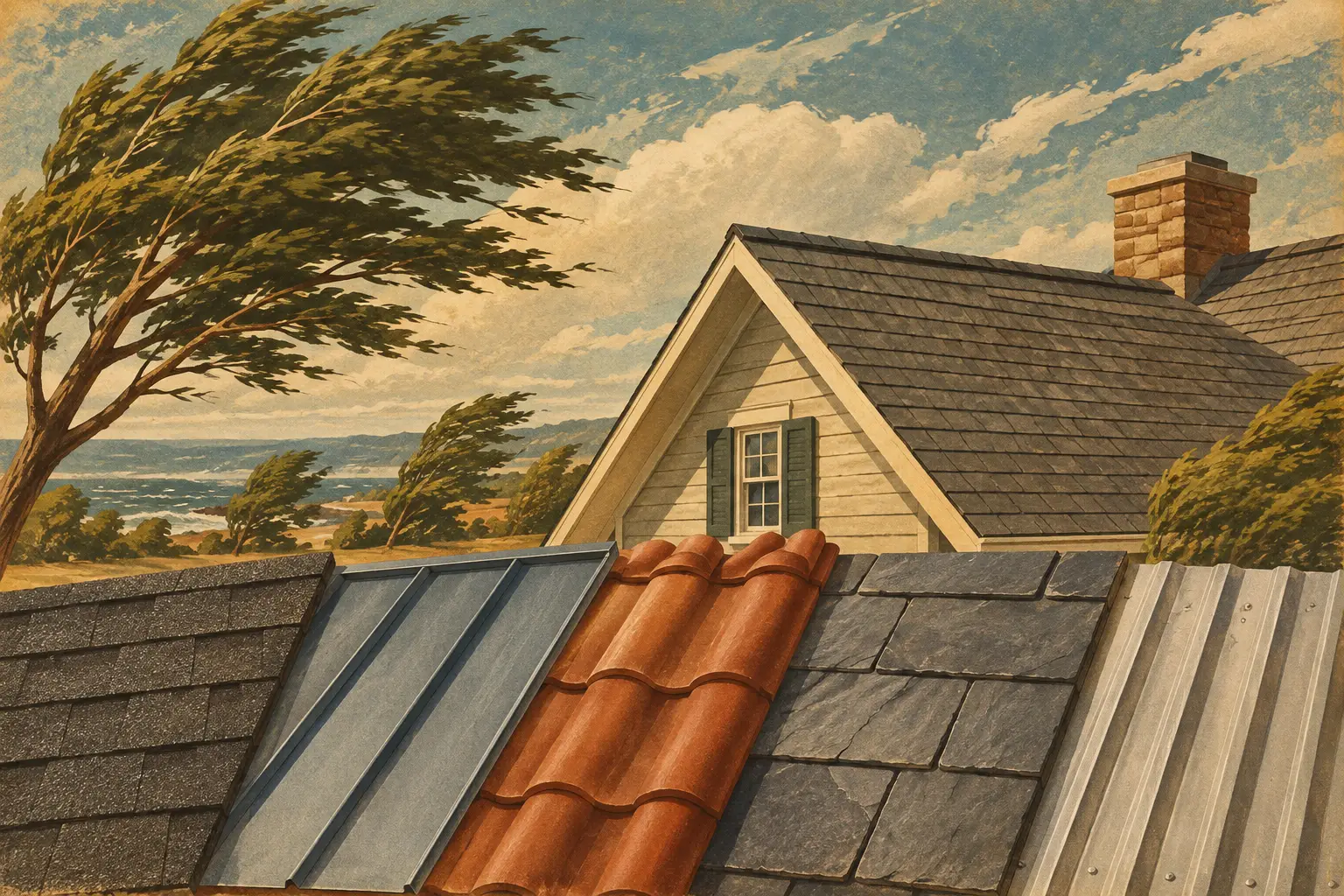
Roofing Materials for Windy Climates That Hold Up
A strong gust can turn a small roofing weakness into missing shingles, lifted flashing, or a leak that reaches the attic before anyone notices. Choosing the right roofing materials for windy climates matters across Rapid City and the Black Hills, where changing weather, steep slopes, open exposure, snow, and hail can all put added pressure on a roof system.
The best choice is rarely just the material with the highest advertised wind rating. Wind resistance depends on how the complete roof is designed and installed: the deck beneath it, the fasteners, starter courses, underlayment, flashing, edge metal, ventilation details, and the crew’s attention to each transition. A dependable roof is built as a system, not assembled as a collection of parts.
What Wind Does to a Roof
Wind does not simply blow across a roof. As air moves over ridges, eaves, corners, and roof-to-wall connections, it creates uplift. That uplift pulls upward on shingles, panels, and metal edges. Corners and perimeter areas often face the greatest force, which is why damage may begin there even when the middle of the roof appears intact.
Once one shingle tab, seam, or piece of flashing lifts, wind can get underneath the roofing material. That creates a larger opening for rain, snow, and additional wind pressure. For commercial buildings with broad, low-slope roof areas, uplift can affect membrane seams and perimeter attachment. For homes, the common trouble spots are ridge caps, valleys, eaves, rake edges, chimneys, and vent penetrations.
A roof also needs to manage more than wind. In the Black Hills, a material that handles gusts but performs poorly against hail, temperature swings, ice, or snow load may not be the best long-term investment. The goal is to choose a system suited to the property, not a one-size-fits-all answer.
Best Roofing Materials for Windy Climates
Architectural asphalt shingles
Architectural asphalt shingles are a practical choice for many homes because they balance cost, appearance, availability, and dependable performance. Higher-quality architectural shingles are thicker than basic three-tab shingles and can be installed with enhanced fastening patterns for stronger wind resistance.
Not all asphalt shingle systems perform the same way. Manufacturer wind ratings often depend on using specific starter shingles, matching ridge caps, approved underlayment, and a required number of fasteners per shingle. A shingle with a strong published rating can still fail early if the wrong accessories are used or nails are placed too high, too low, or driven through the shingle mat.
For many residential properties, architectural shingles offer a sensible path to reliable protection. They are especially worth considering when installed by an experienced contractor who understands how local conditions affect fastening and edge details.
Standing seam metal roofing
Standing seam metal is one of the strongest options for properties exposed to frequent high winds. Its long metal panels lock together with raised seams, and many systems use concealed clips rather than exposed fasteners through the face of the panel. When properly engineered and installed, this design provides excellent resistance to wind uplift.
Metal roofing also sheds snow efficiently and can offer a long service life. It is a good fit for homeowners and commercial property owners who want a durable, low-maintenance roof and are prepared for a higher initial cost. The trade-off is that details matter greatly. Panel length, clip spacing, trim attachment, roof geometry, and expansion allowances must all be planned correctly. A poorly installed metal roof can rattle, leak at penetrations, or lose edge components in heavy wind.
Exposed-fastener metal panels may cost less, but they are not the same as a standing seam system. Fasteners and washers require careful installation and periodic inspection because temperature movement and weather exposure can affect them over time.
Metal shingles and stone-coated steel
Metal shingles and stone-coated steel provide another wind-conscious option for owners who prefer the appearance of traditional shingles, shake, or tile. These products are lighter than concrete or clay tile and can offer strong wind performance when installed as a complete approved system.
They can be particularly useful where a property owner wants the durability of steel without the look of long vertical standing seam panels. Cost, local material availability, and installer experience should all be part of the decision. Specialty materials only perform as intended when the crew is familiar with the product’s fastening and flashing requirements.
Concrete or clay tile
Tile roofs can resist wind well when they are properly engineered and mechanically fastened, but they are not automatically the right answer for every property. Concrete and clay are heavy materials. The structure beneath the roof must be able to support the load, including snow conditions that may occur in the Black Hills.
Tile can also be more expensive to repair after a hail event or when individual pieces crack. For the right building and budget, it can be an attractive, durable system. For many local homes, however, metal or architectural shingles deliver more practical value without the added structural concerns.
Low-slope commercial roof membranes
Commercial properties often use membranes such as TPO, PVC, EPDM, or modified bitumen rather than shingles. In windy conditions, the attachment method is a major decision. A membrane may be mechanically attached, fully adhered, ballasted, or installed through another approved assembly, depending on the building and system design.
Mechanically attached systems need the correct fastener pattern, particularly at the perimeter and corners where uplift is highest. Fully adhered systems can perform very well, but the substrate preparation and adhesive application must be right. Building height, parapet walls, roof shape, exposure, drainage, and local code requirements all influence the proper specification.
Wind Ratings Are Helpful, but They Are Not the Whole Story
A wind rating gives property owners a useful starting point, but it should not be treated as a guarantee that any roof will survive every storm. Ratings are tied to specific test methods and installation instructions. They may also assume a certain roof slope, fastening pattern, or use of matching components.
Ask how a proposed material is tested and what installation details are required to achieve its stated rating. It is also wise to ask whether the estimate includes starter material, ridge caps, ice and water protection where appropriate, new flashing, drip edge, and any needed deck repair. These items are not minor add-ons. They help hold the system together when wind pressure builds.
Insurance requirements and local building codes may also affect the material and installation approach. A contractor should evaluate the property rather than recommend a roof based only on a brochure or a neighbor’s home.
Installation Details That Make the Difference
The strongest roofing material cannot compensate for weak installation. Before new roofing goes on, the deck should be inspected for rot, delamination, loose panels, or inadequate attachment. Fasteners need solid material to hold. If the decking is compromised, wind uplift can damage a roof from the bottom up.
At the roof edge, properly installed drip edge and securely fastened metal trim help protect the areas most exposed to uplift. Starter shingles or starter strips create the first line of defense at the eaves and rakes. Ridge caps, pipe boots, chimney flashing, and wall flashing must be secured and sealed according to the material manufacturer’s requirements.
Ventilation also deserves attention. Poor attic ventilation can trap heat and moisture, shortening shingle life and contributing to ice-related problems in winter. A roofing inspection should look at intake and exhaust ventilation as part of the whole exterior system, not as an afterthought.
Choosing the Right Roof for Your Property
A modest, sheltered home may not need the same roofing system as a house on an exposed ridge or a commercial building with a large open roof area. Roof pitch, surrounding trees, building height, roof complexity, attic conditions, budget, and plans to own the property long term all matter.
For a homeowner planning a reliable replacement without moving into a premium price range, a properly installed architectural shingle system may be the best fit. For a highly exposed home or a property owner focused on longevity, standing seam metal may justify its higher upfront cost. Commercial owners need a roof evaluation that considers uplift zones, drainage, foot traffic, equipment penetrations, and how the work can be completed with minimal disruption to occupants or operations.
Good Guys Exteriors helps property owners evaluate these practical details before work begins, with organized job sites and clear communication throughout the project. The right recommendation should explain both the benefits and the limitations of each option.
A roof built for local wind starts with an honest inspection and ends with careful workmanship. When storm season arrives, that attention to material selection and installation can help protect the people, equipment, and memories inside.