
When to Replace Gutters: 8 Signs to Watch
A gutter may look like a simple strip of metal at the roofline, but it manages thousands of gallons of water over the life of a property. In Rapid City and across the Black Hills, that job includes handling spring rain, hail, heavy snow, freeze-thaw cycles, and fast-moving summer storms. Knowing when to replace gutters can help you address a drainage problem before it turns into damaged siding, rotted fascia, foundation moisture, or unsafe ice buildup.
A few drips during a hard rain do not automatically mean you need a new gutter system. Some issues are repairable. The key is understanding whether the problem is isolated or whether the gutters can no longer move water away from the building as intended.
When to Replace Gutters Instead of Repairing Them
Age alone is not a perfect measure, but it is a useful starting point. Properly installed aluminum gutters can often last 20 years or longer. Steel systems may deteriorate sooner if protective coatings fail, while vinyl gutters can become brittle in South Dakota cold. If your gutters are approaching the end of their expected service life and need repeated attention, replacement is usually the more practical investment.
The same is true when multiple parts of the system are failing at once. A single loose hanger or one separated joint can often be repaired. But if you are seeing sagging runs, leaks at several seams, peeling paint, corrosion, and overflowing water, fixing each symptom separately may only postpone a larger problem.
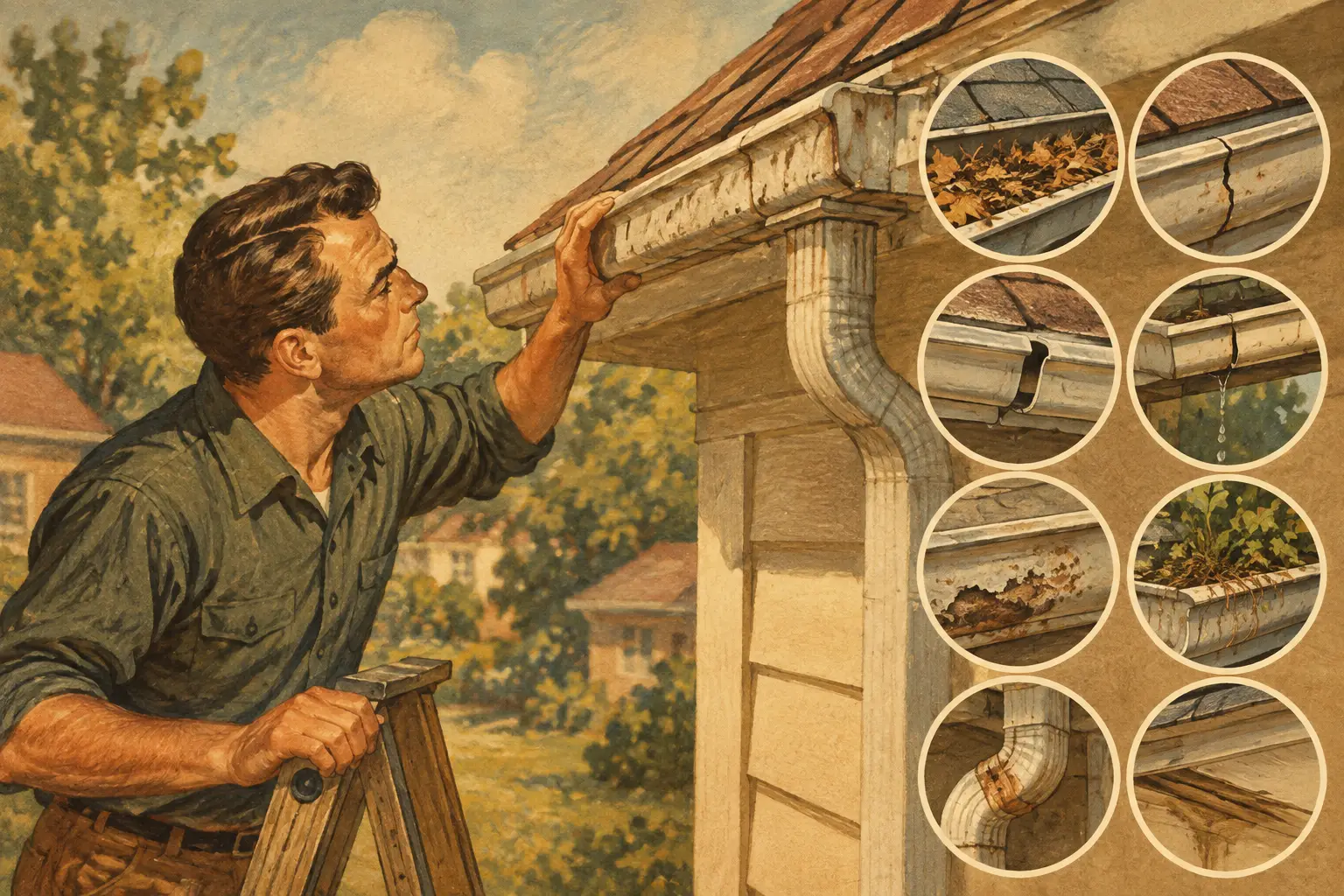
1. Gutters Sag, Pull Away, or Hold Standing Water
Gutters should maintain a slight slope toward the downspouts. When they sag, water pools instead of draining. That standing water adds weight, especially when leaves, snow, or ice are involved. Eventually, hangers can pull loose and the gutter may separate from the fascia board.
A contractor can sometimes resecure a small section if the gutter itself is still straight and sound. Widespread sagging, however, often points to worn hangers, improper slope, undersized gutters, or hidden wood damage behind the system. Replacement creates an opportunity to correct the pitch and inspect the fascia before new materials are installed.
2. Seams Keep Leaking
Traditional sectional gutters have joints where pieces connect. Sealant can fail over time due to expansion, contraction, ice, and UV exposure. One leaking seam may be resealed. If several seams leak or have been patched more than once, replacement with seamless gutters can reduce the number of vulnerable connection points.
Seamless gutters are formed to fit the length of the roofline, with joints generally limited to corners and downspout outlets. They are not maintenance-free, but fewer seams often means fewer places for water to escape.
3. You See Cracks, Holes, Rust, or Splits
Small holes in metal gutters may be patched in certain situations. Cracks in vinyl can sometimes be temporary repairs, but cold weather often makes those repairs less dependable. Rust is a more serious warning sign because it means the material has already begun to break down.
Look closely around seams, end caps, and the bottom of the gutter channel. A pinhole that lets water drip against fascia or siding during every storm can cause more damage than its size suggests. When corrosion or cracking appears in multiple areas, replacement is the safer choice.
4. Paint Is Peeling or There Are Orange Stains
Paint problems are not always cosmetic. Peeling paint on gutters can indicate that water is regularly overflowing or sitting where it should not. Orange stains are commonly associated with rust, while dark streaks on siding below the gutter can signal repeated overflow.
Before replacing gutters for appearance alone, have the drainage system evaluated. The underlying cause may be a clog, a poorly placed downspout, an inadequate gutter size, or roof runoff that is overwhelming the system. New gutters should solve the cause, not just cover the evidence.
Signs Around the Property That Point to Gutter Failure
Sometimes the clearest signs are not on the gutters themselves. Walk around the property after a steady rain, and then look again once the ground has dried. Water should move through the system and discharge away from the foundation without washing out landscaping or running back toward the building.
5. Water Overflows During Ordinary Rain
Overflowing in an extreme downpour can happen even with a well-maintained system. Overflow during ordinary rainfall is different. It may mean the gutters are clogged, installed with the wrong slope, too small for the roof area, or unable to drain through undersized downspouts.
Cleaning should come first if debris is clearly blocking the channel or outlet. If cleaning does not restore proper flow, a replacement system may need larger gutters, better outlet placement, or additional downspouts. This is especially relevant on large roof planes and commercial properties, where concentrated runoff can be substantial.
6. The Fascia, Soffit, or Siding Shows Water Damage
Soft wood, peeling paint, dark staining, or rotting fascia near the roof edge should be addressed quickly. Gutters are mounted to the fascia, so a failing drainage system can damage the very surface that supports it. Water can also work into soffits and siding, where repairs become more involved.
Do not install new gutters over damaged wood without correcting the underlying issue. A proper gutter replacement should include an inspection of the roof edge, fascia, and attachment points so the new system has a stable base.
7. Your Foundation or Landscaping Is Taking the Hit
Downspouts should direct water away from the foundation. If you see soil erosion, mulch washed out of beds, puddles near exterior walls, or dampness in a basement or crawlspace, gutter drainage may be contributing to the problem.
Not every foundation moisture issue begins at the roofline, but gutters are one of the first places worth checking. Extensions, buried drainage, or redirected downspouts may resolve a localized problem. If water is escaping from damaged or undersized gutters before it reaches the downspout, replacement may be necessary.
8. Ice Forms Where It Should Not
Black Hills winters place extra stress on exterior drainage. Icicles can be beautiful from a distance, but heavy ice along the gutter edge can bend metal, loosen fasteners, and create a falling hazard. Repeated freeze-thaw cycles also test seams and sealants.
Gutters do not cause every ice dam. Heat loss and uneven roof temperatures are often major factors. Still, gutters that are loose, poorly sloped, or packed with debris can make winter drainage worse. A professional inspection can separate a gutter problem from a roof ventilation or insulation concern, which matters because the right repair depends on the real cause.
Choosing a Replacement System That Fits the Property
Replacement is more than selecting a color. The right system should match the roof area, roof pitch, local weather exposure, and the building’s drainage needs. A small ranch home, a steep roof with long valleys, and a multifamily property may each need a different approach.
Aluminum seamless gutters are a common choice because they are lightweight, durable, and resistant to rust. Steel can offer strength but requires careful attention to coatings and maintenance. Copper has a distinct appearance and long life, but it comes with a higher initial cost. The best material depends on budget, appearance goals, and how the system will perform in local conditions.
Downspouts deserve equal attention. A quality gutter channel cannot perform well if the downspouts are too few, too small, or discharged in the wrong place. Larger downspouts, splash control, and properly placed extensions can make a meaningful difference during heavy rain.
Why Professional Installation Matters
Gutters need accurate slope, secure fastening, properly sealed end caps, and thoughtful downspout placement. A system that looks straight from the ground can still fail if the pitch is off by a small amount. Poor installation may lead to standing water, overflow, or damage at the roof edge long before the gutter material itself wears out.
For property owners in Rapid City and the Black Hills, it also helps to work with a local exterior contractor who understands snow loads, wind exposure, and the way fast weather changes affect a building. Good Guys Exteriors approaches gutters as part of the larger exterior system, including the roofline, fascia, siding, and drainage path around the property.
If you are uncertain whether a repair will hold or replacement is the better value, schedule an inspection before the next major storm. A clear look at the gutters and the water path around your property can protect more than the roofline – it can help keep the rest of the building dry, sound, and ready for the seasons ahead.