
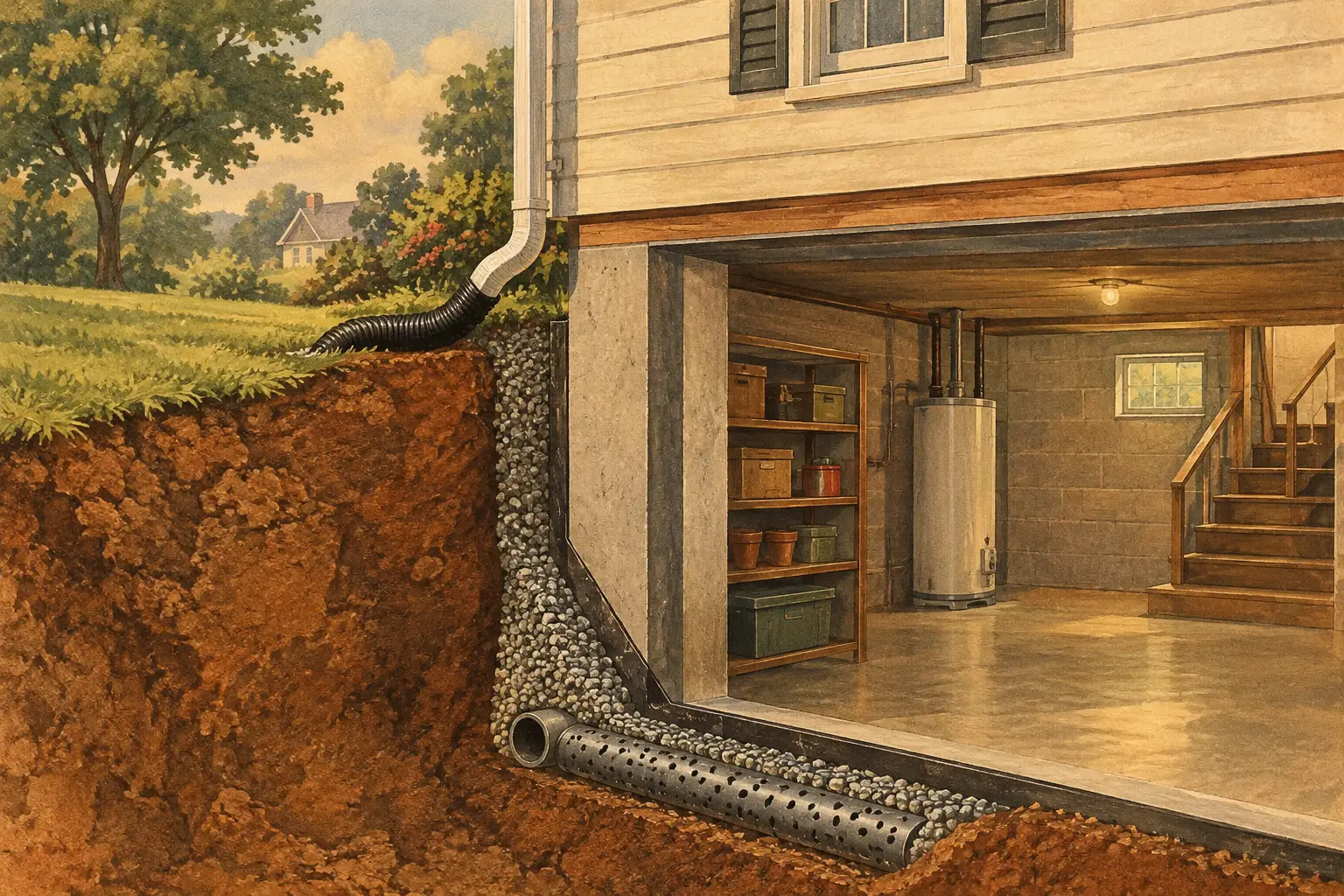
Basement Drainage That Protects Your Foundation
A wet basement rarely starts with a basement problem. More often, it starts outside with rainwater, snowmelt, clogged gutters, or soil that slopes toward the house. Effective basement drainage moves that water away before it can build pressure against foundation walls, find a crack, or soak into the lower level of your home.
For property owners in Rapid City and across the Black Hills, water management deserves attention in every season. Heavy rain, fast spring snowmelt, frozen ground, and freeze-thaw cycles can all expose weak spots around a foundation. The right solution depends on where the water is coming from, how the property is graded, and whether water is entering the basement or simply collecting near the home.
Why Basement Drainage Matters
Soil around a foundation holds water after a storm or thaw. When that soil becomes saturated, it creates hydrostatic pressure against below-grade walls and floors. Water does not need a large opening to enter. It can work through small cracks, construction joints, window wells, pipe penetrations, and porous concrete.
The first sign may be a damp smell, a white chalky residue on concrete, peeling paint, or a small wet spot after rain. Left alone, moisture can contribute to mold growth, damaged flooring, warped framing, foundation deterioration, and lower indoor air quality. For commercial buildings and rental properties, a wet lower level can also interrupt operations and create ongoing maintenance concerns.
Addressing drainage early is usually less disruptive than waiting for recurring water intrusion. It also protects the exterior systems that help preserve the rest of the building, including gutters, siding, landscaping, and the foundation itself.
Start Outside: Follow the Water Path
The most useful inspection happens during or shortly after a steady rain. Walk around the property and look for overflowing gutters, standing water, muddy areas near the foundation, and downspouts that empty directly beside the building. A dry day can hide the actual path water takes.
Check whether the soil slopes away from the home. As a general rule, the ground should fall about 6 inches over the first 10 feet away from the foundation where site conditions allow. Settling soil, landscape edging, mulch buildup, and older planting beds can gradually reverse that slope and direct water toward the basement.
Roof runoff is another common source of trouble. A large roof can shed hundreds of gallons of water during a single storm. If gutters are undersized, clogged, loose, or missing, that water lands at the foundation instead of being carried safely away. Downspouts should discharge well away from the structure, not onto a walkway, driveway, or area that slopes back toward the house.
Gutters and Downspouts Are the First Line of Defense
Gutters are not just a finishing detail on a roof. They are part of the building’s drainage system. Clean, properly pitched gutters collect runoff and send it through downspouts before it can erode soil or pool against exterior walls.
Watch for water spilling over the front edge of gutters, staining on siding, sagging sections, or water cutting channels in the soil below a downspout. These signs can point to a blockage, improper slope, damaged hangers, or a system that cannot handle the roof’s runoff.
Downspout extensions are often a simple improvement, but they need to be installed thoughtfully. Water should be directed to a stable area where it can drain without affecting a neighbor’s property, undermining pavement, or creating an icy surface in winter. On some lots, buried solid drain pipe can carry roof runoff to a more appropriate discharge point.
Common Basement Drainage Solutions
There is no single fix for every wet basement. A property with poor grading needs a different approach than one with a failed footing drain or a basement window well that fills during storms. A qualified exterior contractor can help identify the source before recommending work.
Regrading and Surface Drainage
Regrading corrects the slope of the soil around a building so water naturally moves away from the foundation. This can be highly effective when settling or landscaping has created low spots near the walls. It is often combined with compacted fill, landscape adjustments, or shallow swales that guide water across the yard.
Regrading is not always enough on its own. Properties with flat lots, heavy clay soil, limited space between buildings, or significant uphill runoff may need a more deliberate drainage path. The goal is not simply to move water farther away. It is to move it to a place where it can safely disperse.
Exterior Drain Tile
An exterior drain tile system, sometimes called a footing drain, is installed around the foundation near the footing. Perforated pipe is surrounded by clean gravel and filter fabric so groundwater can enter the pipe and be carried away from the home.
This is one of the more involved basement drainage repairs because it requires excavation around the foundation. It may be the right choice when water pressure outside the walls is a persistent problem, particularly if exterior waterproofing has failed or the original drain system is damaged. The trade-off is cost and disruption to landscaping, patios, and access areas, but it addresses water where the problem begins.
Interior Drainage and Sump Pumps
Interior drainage systems collect water that reaches the foundation and direct it to a sump basin. A sump pump then moves that water out and away from the building. This approach can be practical when exterior excavation is difficult, when access is limited, or when groundwater remains high around the foundation.
A sump pump is only as dependable as its power supply, discharge line, and maintenance. Test it periodically, keep the basin clear, and make sure the discharge point does not freeze or send water back toward the foundation. Backup power is worth considering in areas where storms can cause outages.
Window Wells and Foundation Openings
Below-grade windows need properly sized, clean window wells that drain. If a well fills with leaves, snow, mulch, or runoff, water can rise above the window frame and enter the basement quickly. Clear debris regularly and confirm there is a working drain connection or gravel base below the well.
Foundation cracks, deteriorated sealant around utility penetrations, and gaps around exterior hose connections should also be evaluated. Sealing these openings can help, but sealant alone is not a substitute for correcting water that is continuously collecting outside the wall.
When a Drainage Problem Needs Professional Attention
A one-time damp spot after an extreme storm may be manageable with gutter cleaning or a downspout extension. Repeated water intrusion calls for a closer look. If you see water entering at the same location, notice cracking that is growing, find mold or persistent odors, or have standing water near the foundation after ordinary rain, it is time to identify the cause.
For commercial properties, drainage concerns should be addressed before they affect tenant spaces, stored inventory, electrical equipment, or customer access. Property managers can reduce surprises by checking roofs, gutters, downspouts, and low areas around the building before spring runoff and before the heaviest rain periods.
Good Guys Exteriors helps Black Hills property owners assess the exterior conditions that often contribute to water issues, including roof runoff, gutters, and drainage around the structure. Clear communication matters because drainage repairs can range from a straightforward gutter correction to a larger site and foundation project.
A Seasonal Maintenance Routine That Pays Off
Basement protection is easier when drainage maintenance becomes part of regular exterior care. In spring, clear gutters and downspouts after snowmelt, inspect extensions, and look for soil washed away near the foundation. After major storms, check for overflow and standing water. In fall, remove leaves before they create blockages, and before winter, make sure discharge areas will not send water across paths that can freeze.
Pay attention to changes in the property. New landscaping, a replaced driveway, a patio, or even a new garden bed can alter how water travels. What worked for years can change after one grading project or one season of settlement.
A dry basement begins at the roofline and continues all the way to the edge of the property. If water is regularly reaching your foundation, start by tracing its path outside. A few timely corrections can protect the space below your feet and help your property stay ready for the next Black Hills storm.