
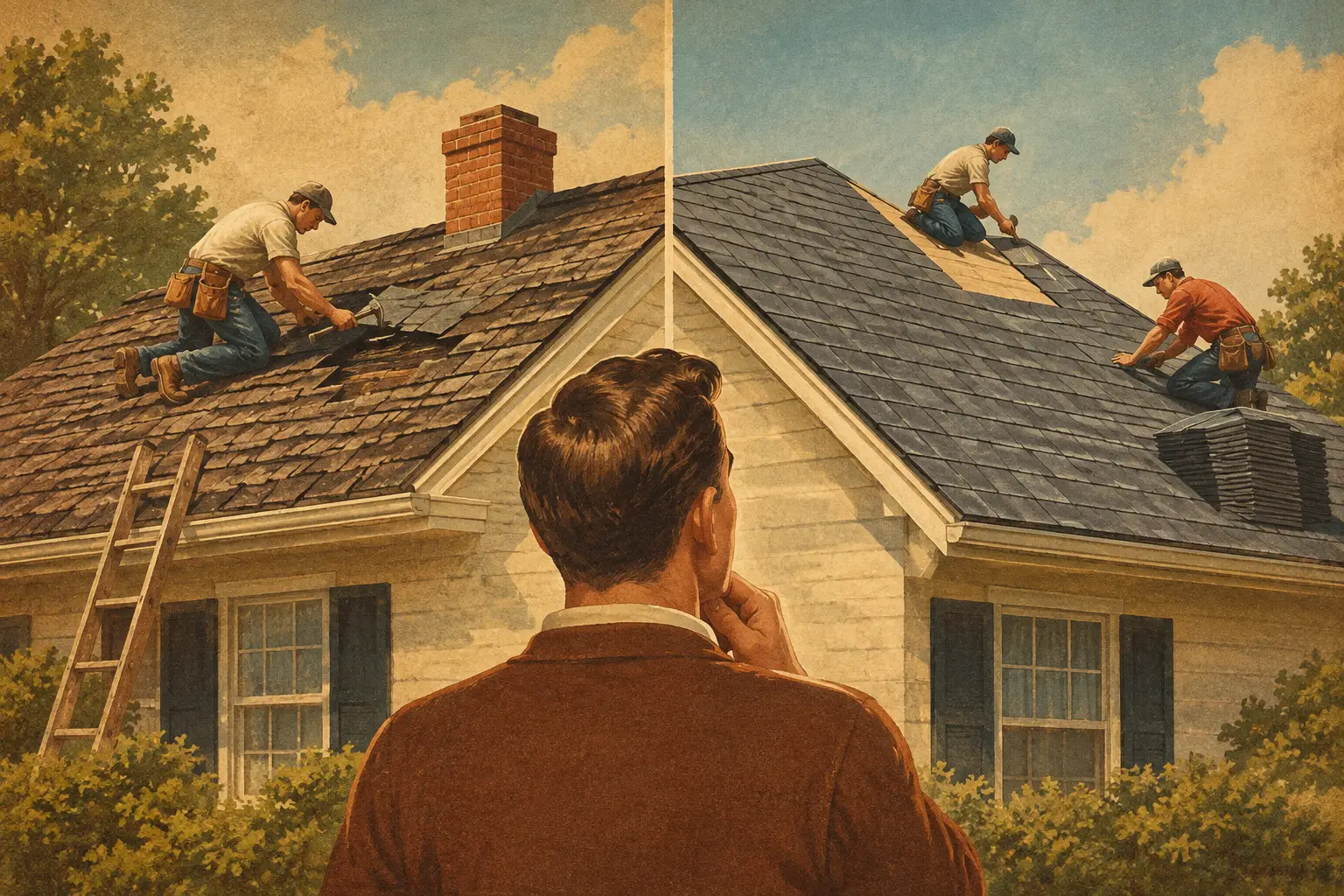
Roof Repair Versus Replacement: Which Fits Your Roof?
A missing shingle after a windstorm may call for a focused repair. A ceiling stain that keeps returning after several repairs may point to something bigger. Roof repair versus replacement is not a decision to make based on appearance alone. For homeowners and property managers in Rapid City and across the Black Hills, the right answer comes down to the roof’s condition, its age, the source of the problem, and the cost of protecting the building for years ahead.
A professional inspection gives you the clearest path forward. It can separate a localized issue from a roof system that is nearing the end of its useful life, so you can invest with confidence instead of reacting to the next leak.
When Roof Repair Is the Right Choice
Roof repairs are often the practical choice when damage is limited and the rest of the roof remains in sound condition. A few lifted or missing shingles, damaged flashing around a chimney, a small puncture, or a minor leak caused by a recent storm can frequently be corrected without replacing the entire roof.
Repair is especially worthwhile when your roof is relatively new and has plenty of service life remaining. If the shingles are still flexible, granule loss is minimal, and there are no widespread signs of water intrusion, a targeted repair can restore protection while keeping costs manageable.
The key is finding the actual source of the issue. Water can enter near a vent, valley, skylight, or pipe boot and travel before it appears inside. Repairing only the visible symptom can leave the underlying problem in place. A thorough inspection should include the roofing material, flashing, penetrations, attic ventilation, and areas where water commonly collects.
For commercial properties, a repair can also be a smart way to address a limited problem with minimal disruption to tenants, staff, or customers. The work should still be planned carefully, with clear access procedures and a clean, organized job site.
Signs a Repair May Only Be a Short-Term Fix
A roof can sometimes be repaired, but that does not always mean repair is the best value. Repeated leaks in different areas, frequent shingle blow-offs, and multiple past repairs are signs that the roof may be losing its ability to perform as a complete system.
Age matters, too. Asphalt shingle roofs often provide dependable service for many years, but Black Hills weather can shorten that timeline. Hail, high winds, heavy snow, sharp temperature swings, and intense sun all place stress on roofing materials. If a roof is nearing the expected end of its lifespan, paying for another repair may simply delay a replacement that is already approaching.
Look beyond the roof surface. Dark streaks on ceilings, damp attic insulation, peeling exterior paint near the roofline, or moldy odors can indicate moisture problems that deserve prompt attention. Roof damage can affect framing, insulation, drywall, and indoor air quality if it is left unresolved.
Roof Repair Versus Replacement: The Cost Question
The lower upfront price of a repair can be appealing, and in many cases it is exactly the right investment. But the decision should consider total value, not just the current invoice.
A repair makes sense when it resolves a defined issue and helps a healthy roof continue doing its job. Replacement makes more sense when repairs are becoming routine, material deterioration is widespread, or the roof has sustained storm damage across large sections. Putting money into repeated patches on an aging roof can cost more over time than completing one well-planned replacement.
There is also the cost of uncertainty. A roof that continues to leak can interrupt business operations, damage inventory, create tenant concerns, or lead to interior repairs that quickly exceed the price of addressing the roof correctly. For a home, ongoing leaks can affect belongings, finished spaces, and the comfort of the people living there.
A contractor should explain the options plainly: what can be repaired now, how long that repair is reasonably expected to last, and what conditions would make replacement the more responsible recommendation. Clear communication is part of protecting your investment.
When Full Roof Replacement Is the Better Investment
Replacement is generally the stronger option when damage or wear affects a large portion of the roof. Curling, cracking, bald shingles with significant granule loss, soft spots in the roof deck, and widespread storm impact are all reasons to evaluate a new roof.
A replacement also gives property owners the opportunity to correct issues that may not be visible from the ground. Damaged decking can be replaced, flashing can be updated, and ventilation can be assessed as part of a complete roofing project. These details matter because a roof is more than its outermost shingles. It is a system designed to shed water, manage airflow, and protect the structure below.
For property owners preparing to sell, a new roof may improve buyer confidence and curb appeal. For those planning to stay put, it can provide long-term protection and reduce the concern that comes with every major storm. The best material and installation approach will depend on the building, roof slope, budget, and performance goals.
Storm Damage Requires a Careful Assessment
After hail or high winds, visible damage is not always the whole story. Hail can bruise shingles and weaken their protective surface even when there are no obvious holes. Wind can break the seal between shingles, creating a path for future water intrusion. Damage may be scattered across slopes and difficult to see without a close inspection.
Property owners should document what they notice after a storm, including fallen shingles, dents to gutters or vents, and new interior stains. Then arrange a professional assessment before making assumptions about repair or replacement. Waiting too long can allow minor damage to become a larger issue, particularly if another storm arrives before the roof is secured.
An experienced local contractor understands the weather patterns and building conditions common in the Black Hills. That local knowledge helps when evaluating whether a roof needs a focused repair, a full replacement, or monitoring over time.
Questions to Ask Before You Decide
Before approving roofing work, ask for a direct explanation of the roof’s present condition and the proposed scope. You should understand whether the issue is isolated, what materials will be used, and whether the repair is expected to blend with the existing roof.
It also helps to ask these questions:
- Is the damage limited to one area or spread across multiple roof sections?
- How much useful life does the existing roof likely have left?
- Are there signs of decking, flashing, or ventilation problems?
- Will a repair address the cause of the leak, not just the visible damage?
- What future repairs are likely if replacement is postponed?
For commercial owners and managers, add questions about site safety, scheduling, tenant communication, debris control, and how the crew will minimize disruption. A well-organized project protects more than the roof. It respects everyone who uses the property.
Choose the Solution That Protects the Whole Property
There is no one-size-fits-all answer to roof repair versus replacement. A modest repair may be the responsible choice for a newer roof with a single damaged area. A full replacement may offer far better value when wear, storm damage, or recurring leaks point to system-wide failure.
Good Guys Exteriors approaches that decision with the same care we would want for our own neighbors. A clear inspection, straightforward recommendations, skilled workmanship, and a clean work area can make a difficult property decision feel manageable.
If you have noticed a leak, missing shingles, or signs of storm damage, do not wait for the next hard rain or heavy snow. A timely inspection can give you the information needed to protect your home, business, tenants, and peace of mind.