
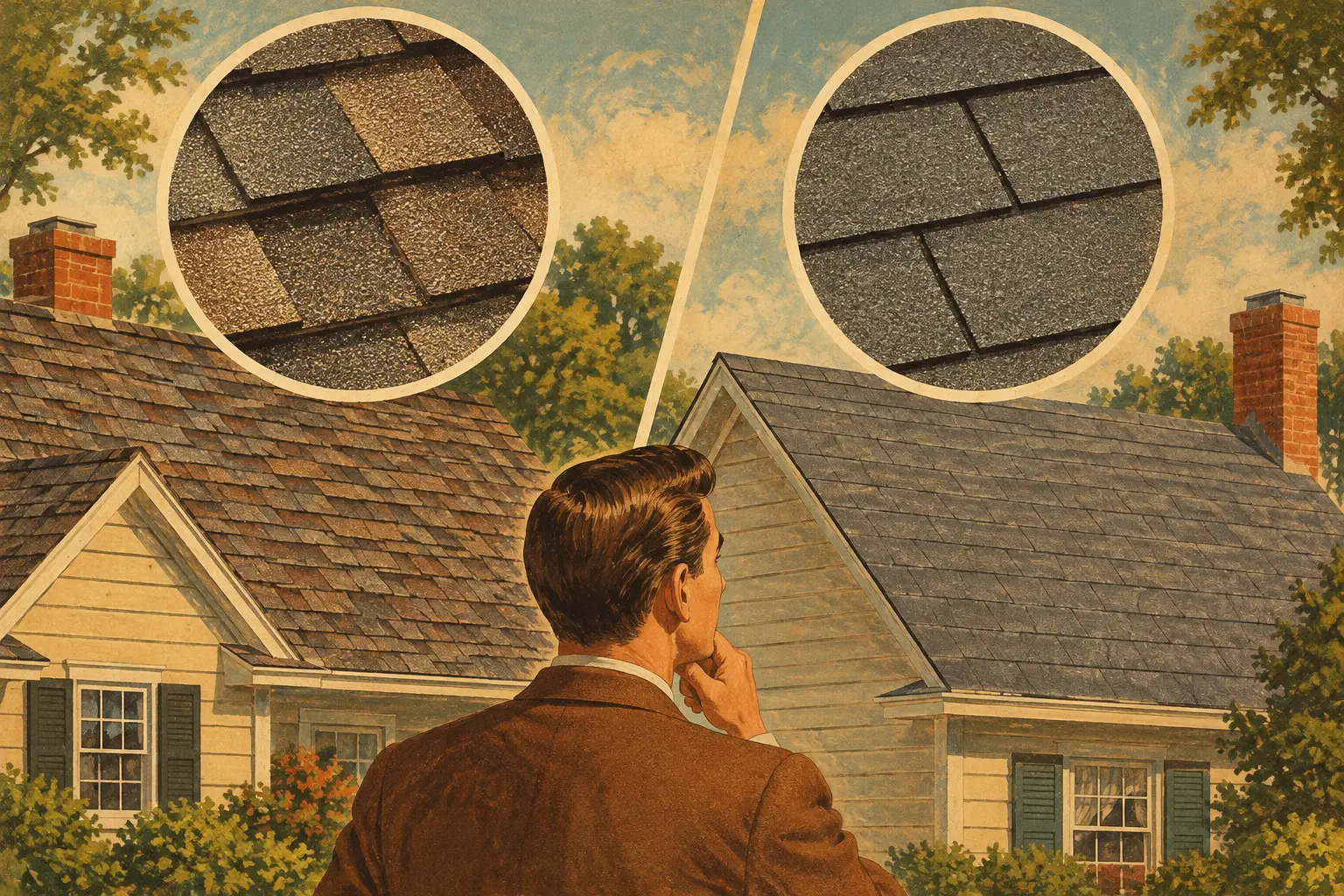
Architectural Shingles Versus Three-Tab Shingles
A roof in the Black Hills has to handle more than a few rainy afternoons. High winds, hail, heavy snow, rapid temperature swings, and strong summer sun can all test the materials protecting your home. When it is time for a replacement, the choice between architectural shingles versus three-tab shingles affects your budget, your home’s appearance, and how the roof performs over time.
Both options are asphalt shingles, and both can be installed professionally to create a dependable roof system. The better choice depends on the home, the local conditions, the property owner’s goals, and how long they expect to own the building. For many Rapid City-area homeowners, architectural shingles offer the stronger long-term value. Three-tab shingles may still make sense in select situations where upfront cost is the main concern.
Architectural Shingles Versus Three-Tab Shingles: The Main Difference
Three-tab shingles are the traditional, flat asphalt shingle style. Each shingle has three evenly spaced tabs along its lower edge, creating a uniform pattern across the roof. They are lightweight, straightforward, and generally the lower-cost asphalt shingle option.
Architectural shingles, also called dimensional or laminated shingles, are made with multiple layers of asphalt and backing material. Their layered construction gives them a thicker profile and creates shadow lines that resemble wood shake or slate roofing from the ground. They are not just designed for appearance. That added material usually improves strength, wind performance, and service life.
The difference is easy to see from the curb. A three-tab roof looks neat and consistent, while an architectural roof has more depth and variation. The difference becomes even more meaningful when Black Hills weather arrives.
Cost: Lower Upfront Price vs. Long-Term Value
Three-tab shingles usually cost less to purchase and install because they use less material and have a simpler design. For a rental property, a short-term ownership plan, or a project with a tightly fixed budget, that lower initial price can be appealing.
Architectural shingles cost more at the start, but the material upgrade can reduce the need for an earlier replacement. They commonly carry longer manufacturer warranties than three-tab shingles, although a warranty is not the same as a guarantee that a roof will last a specific number of years. Installation quality, attic ventilation, storm exposure, and maintenance still matter.
A homeowner comparing estimates should look beyond the bottom-line price. Consider the expected useful life of the material, the home’s exposure to wind and hail, the added curb appeal, and the potential cost of reroofing again sooner. A lower-price roof is not always the lower-cost decision over the life of the property.
Wind, Hail, and Black Hills Weather Performance
The Black Hills region can see serious wind events, along with hailstorms that cause sudden, widespread roof damage. No asphalt shingle is immune to severe hail, and no roofing system can eliminate storm risk. Still, architectural shingles generally provide more resistance to wind uplift than standard three-tab shingles because of their thickness, weight, and design.
Many architectural products are rated for higher wind speeds than basic three-tab options. The exact rating depends on the specific shingle, approved installation method, nail placement, roof slope, and whether the manufacturer’s full roofing system requirements are followed. A quality installation matters just as much as the shingle selected.
Three-tab shingles are thinner and can be more vulnerable to wind damage as they age. Tabs may lift, crease, crack, or blow off during strong gusts. Once a tab is damaged, water can work its way beneath the shingle and threaten the roof deck, underlayment, or interior of the home.
For homes on open lots, ridgelines, or areas with little wind protection, architectural shingles are often the more practical option. The same consideration applies to commercial properties and multifamily buildings where an unexpected repair can disrupt tenants, operations, and budgets.
Appearance and Curb Appeal
A roof can account for a large share of what people see when they approach a home. That makes shingle selection an exterior design decision as well as a protective one.
Three-tab shingles provide a clean, traditional look. Their flat, repetitive pattern works well on modest homes or buildings where appearance is less of a priority. Color options can be more limited, and the finished roof will have less visual dimension.
Architectural shingles are available in a broader range of colors and blended tones. Their layered profile gives the roof more texture, which can complement stone, siding, brick, and the natural landscape common throughout western South Dakota. They can make a simple roofline look more substantial without the cost of premium materials such as metal, cedar, or slate.
If resale value and curb appeal are part of the decision, architectural shingles tend to have the edge. Buyers often recognize their dimensional look, and a newer architectural roof can help a property make a stronger first impression.
Installation Details Matter With Either Shingle
Choosing a better shingle does not make up for poor workmanship. A roof is a system made up of decking, underlayment, flashing, ventilation, starter materials, ice and water protection where needed, shingles, and proper drainage. If one part of that system is overlooked, even a premium shingle may not perform as intended.
Proper flashing around chimneys, vents, skylights, walls, and valleys is especially important. These are common areas for leaks, and they should never be treated as an afterthought. Adequate attic ventilation also helps manage heat and moisture, protecting the roof structure and helping shingles age more evenly.
Before signing a contract, property owners should ask what materials are included, whether damaged decking will be addressed if discovered, how the site will be protected and cleaned, and how communication will be handled if weather affects the schedule. A clear scope of work prevents avoidable surprises.
When Three-Tab Shingles May Still Be a Good Fit
Architectural shingles are not automatically the right answer for every project. Three-tab shingles can be a reasonable choice when matching an existing three-tab roof for a limited repair, keeping costs down on a short-term property, or reroofing a lower-priority outbuilding where the owner accepts a shorter expected service life.
They may also be used where a homeowner prefers the flat, uniform appearance of a traditional roof. The key is to make that choice with realistic expectations about durability and wind performance, rather than assuming all asphalt shingles perform the same way.
One challenge is future repair matching. If a three-tab roof is older, finding an exact replacement color and profile can be difficult. Architectural shingles also change over time, but their varied coloration can sometimes make small repairs less visually noticeable than a missing or mismatched flat tab.
Choosing the Right Shingle for Your Property
For a primary residence in Rapid City or the surrounding Black Hills, architectural shingles are often the better investment. Their thicker construction, stronger appearance, and typical wind ratings align well with the demands of local weather and the value most owners want from a full roof replacement.
Three-tab shingles remain a budget-focused option, particularly when immediate cost outweighs long-term performance. The right decision comes down to the building’s exposure, the owner’s timeline, the condition of the existing roof system, and the level of protection desired.
A roof replacement is a major project, but it should not feel confusing. Good Guys Exteriors helps property owners evaluate their roof condition, understand their material options, and move forward with experienced workmanship and an organized job site. The best shingle is the one that fits your property, your budget, and the weather it needs to withstand for years ahead.