
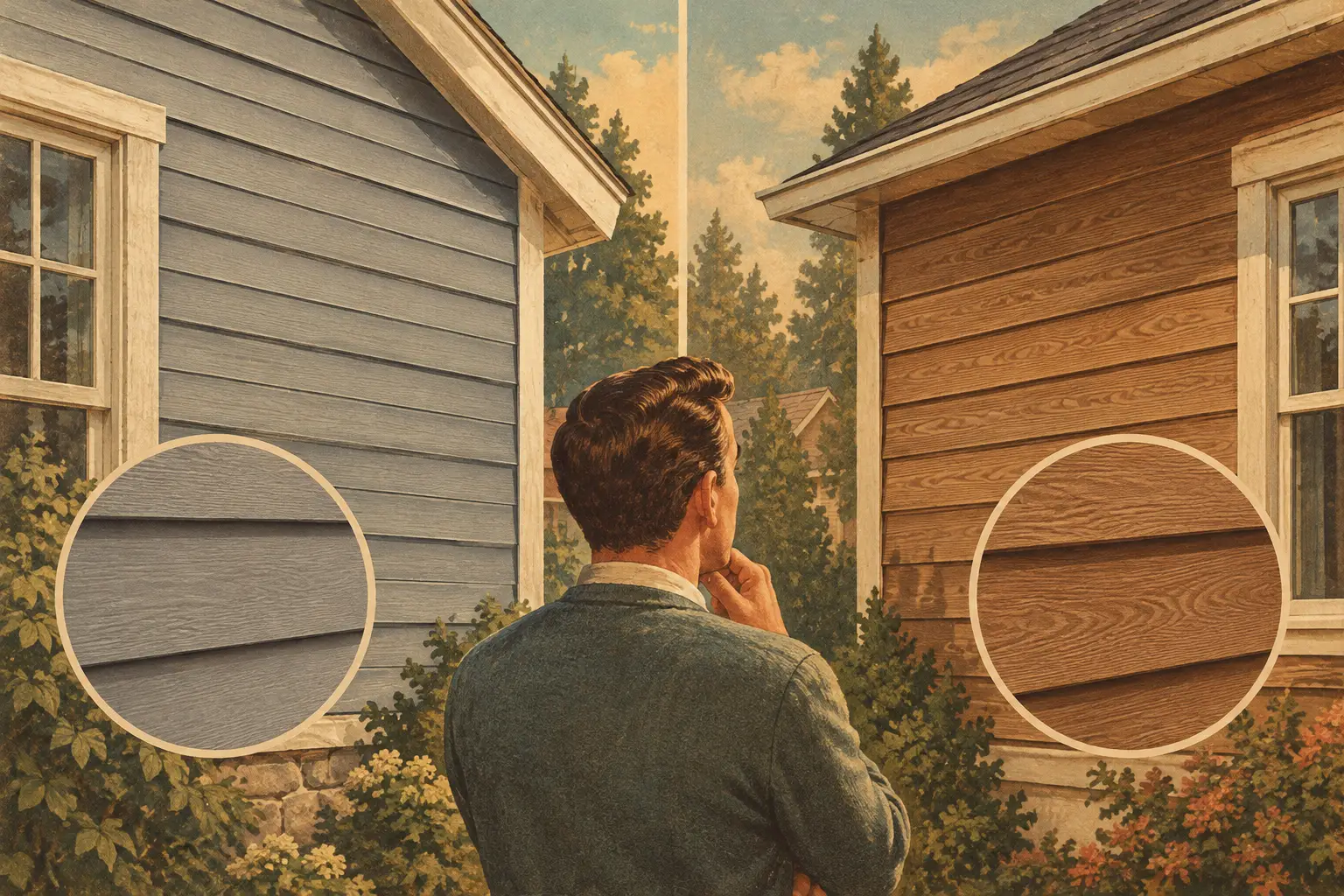
Fiber Cement Versus Engineered Wood Siding
A siding decision in the Black Hills needs to account for more than curb appeal. Summer sun, sharp winter temperature swings, wind, hail, and moisture can all test an exterior over time. When comparing fiber cement versus engineered wood, the better choice depends on your property, budget, preferred look, and willingness to keep up with maintenance.
Both materials can provide durable, attractive siding when they are specified and installed correctly. The key is understanding where each one performs well and what it asks of you over the life of the home or building.
Fiber Cement Versus Engineered Wood: The Main Difference
Fiber cement siding is made from a mixture of cement, sand, cellulose fibers, and water. It is manufactured into planks, panels, shingles, and trim that can resemble painted wood. Because it is mineral-based, fiber cement does not rot like traditional wood, and it is not a food source for insects.
Engineered wood siding is made from wood strands or fibers that are bonded with resins and protective coatings. It is designed to offer the warmth and workability of wood while improving resistance to moisture, fungal decay, and insect damage. Many engineered wood products are factory-primed or prefinished, which can speed up the installation process.
Neither product is automatically right for every property. A well-installed system with proper flashing, clearance from soil and roofing, sealed cuts, and reliable water management will outlast a poorly installed product, regardless of the material on the label.
How Each Material Handles Black Hills Weather
Moisture and freeze-thaw cycles
Fiber cement handles moisture well when it is installed with the correct clearances and painted or finished according to the manufacturer’s requirements. It is dimensionally stable, meaning it does not expand and contract as much as wood-based products. That can be valuable during the frequent temperature changes common in western South Dakota.
Engineered wood is built to resist moisture, but its protection depends on its factory finish and the condition of the outer coating. Exposed cuts, damaged edges, and gaps around trim need prompt attention. If water repeatedly reaches unprotected areas, the risk of swelling or deterioration increases. This does not make engineered wood a poor choice, but it does make careful installation and routine inspections especially important.
Wind, hail, and impact
The Black Hills can see high winds and hail that cause exterior damage in a short period of time. Fiber cement is known for its hard, substantial surface, but it can crack or chip from a direct impact. Repairs may involve replacing an individual board and repainting to blend the finish.
Engineered wood is generally lighter and has more flexibility under impact. Depending on the product and the force of the hail, it may dent, chip, or sustain surface damage rather than crack. Actual storm performance varies by product profile, thickness, installation method, and the size and speed of hail. Homeowners should review product ratings and warranty terms rather than assume either siding option is hail-proof.
Fire resistance
Fiber cement is noncombustible, which is a meaningful benefit for properties near grassland, wooded areas, or locations where wildfire risk is a concern. It will not ignite when exposed to direct flame, although the wall assembly behind it and nearby building materials still matter.
Engineered wood is a wood-based product and is combustible. Some products may have fire-related ratings or treatments, but it does not offer the same noncombustible character as fiber cement. If fire resistance is a leading concern, fiber cement deserves serious consideration.
Appearance and Design Flexibility
For many property owners, appearance is where the decision becomes personal. Engineered wood often delivers a deep, convincing wood-grain texture and crisp edges. It can be a strong fit for cabins, ranch-style homes, newer neighborhoods, and buildings where a warm, traditional exterior is the goal.
Fiber cement also comes in a wide range of styles, including lap siding, vertical panels, board-and-batten profiles, shingles, and smooth contemporary finishes. Its painted appearance works especially well on homes seeking clean lines and long-lasting color options. Factory-finished fiber cement can provide a consistent look, while primed boards allow for more custom paint choices.
Keep the whole exterior in view. Siding should work with the roof color, gutter system, stone or brick accents, window trim, and the architectural style of the property. The most attractive option is not always the one with the strongest sample in a showroom. It is the one that looks right on the full building.
Installation Matters as Much as the Siding
Fiber cement is heavier than engineered wood and requires specialized cutting practices, proper fasteners, and experienced handling. Cutting can create silica dust, so crews need the right tools and safety procedures. Its weight may also make installation more labor-intensive.
Engineered wood is lighter and easier to cut, carry, and install. That can reduce labor time and make it practical for certain projects. Still, it is not a material to rush. Installers must follow the manufacturer’s nailing pattern, flashing details, joint treatment requirements, and ground-clearance rules. A missed detail around a window, roof-to-wall transition, or deck attachment can allow water behind any siding system.
Before signing a contract, ask how the contractor will address housewrap, flashing, trim, caulking, ventilation, damaged sheathing, and gutters. Siding is one layer of a larger weather barrier. If water is not directed away from the home, even premium materials can have trouble performing as intended.
Maintenance and Long-Term Ownership Costs
Both materials need basic care. Regularly rinse away dirt, check caulking and trim joints, keep mulch and soil away from the siding, and make sure gutters and downspouts move water away from the foundation. After a severe storm, inspect for cracks, chips, loose pieces, and impact marks.
Fiber cement typically requires repainting over time, though the schedule depends on the finish, sun exposure, weather conditions, and workmanship. Its resistance to rot and insects can make it appealing for owners who want a lower-maintenance alternative to natural wood.
Engineered wood also needs a maintained paint or finish system. Pay close attention to scratched areas, exposed cut edges, and locations that receive repeated moisture. When coating repairs are handled early, they are usually simpler and less expensive than waiting for a small issue to spread.
Upfront costs vary with product line, profile, color, trim details, removal of old siding, and wall repairs discovered during the project. Engineered wood may have a lower installed cost in some cases because it is lighter and faster to work with. Fiber cement can cost more to install, but its fire resistance and material durability may support its value over the long term. The right comparison is the complete installed price, expected maintenance, warranty coverage, and projected ownership period – not just the price per board.
Which Siding Is Right for Your Property?
Fiber cement may be the better fit if you prioritize noncombustible siding, resistance to insects and rot, dimensional stability, and a painted exterior with long-term durability. It is a practical option for homeowners who want a substantial material and are prepared for professional installation and eventual repainting.
Engineered wood may be the better fit if you want a pronounced wood look, a lighter material, and potentially lower installation costs. It can perform very well when the product is installed to specification and the finish is inspected and maintained over time.
Commercial owners and property managers should also consider access, tenant disruption, future repair needs, and the consistency of the exterior across larger elevations. A material that makes sense for one single-family home may not be the most efficient choice for a multifamily building or business property.
A siding project is also a good time to evaluate the roof edge, fascia, soffit, gutters, and drainage. These components work together to keep water out of the wall system. Good Guys Exteriors helps Black Hills property owners look at the full exterior so the siding decision supports lasting protection, not just a fresh appearance.
The best next step is to have the existing exterior inspected, discuss the conditions around your property, and compare real samples in natural light. A well-chosen siding system, installed with care and maintained consistently, gives your property the protection it needs through every South Dakota season.