
Residential Versus Commercial Roofing Explained
A roof over a Rapid City home may face the same hail, high winds, heavy snow, and sharp temperature changes as the roof over a local shop or apartment building. But the two roofs are not built, managed, or replaced the same way. Understanding residential versus commercial roofing helps property owners make better decisions before a small concern turns into an expensive interruption.
For homeowners, the priorities often include long-term protection, curb appeal, and keeping the household comfortable during the project. For business owners and property managers, the roof also affects tenants, customers, inventory, operations, safety planning, and maintenance budgets. Both deserve experienced workmanship, but each type of property calls for a different approach.
Residential Versus Commercial Roofing: The Main Differences
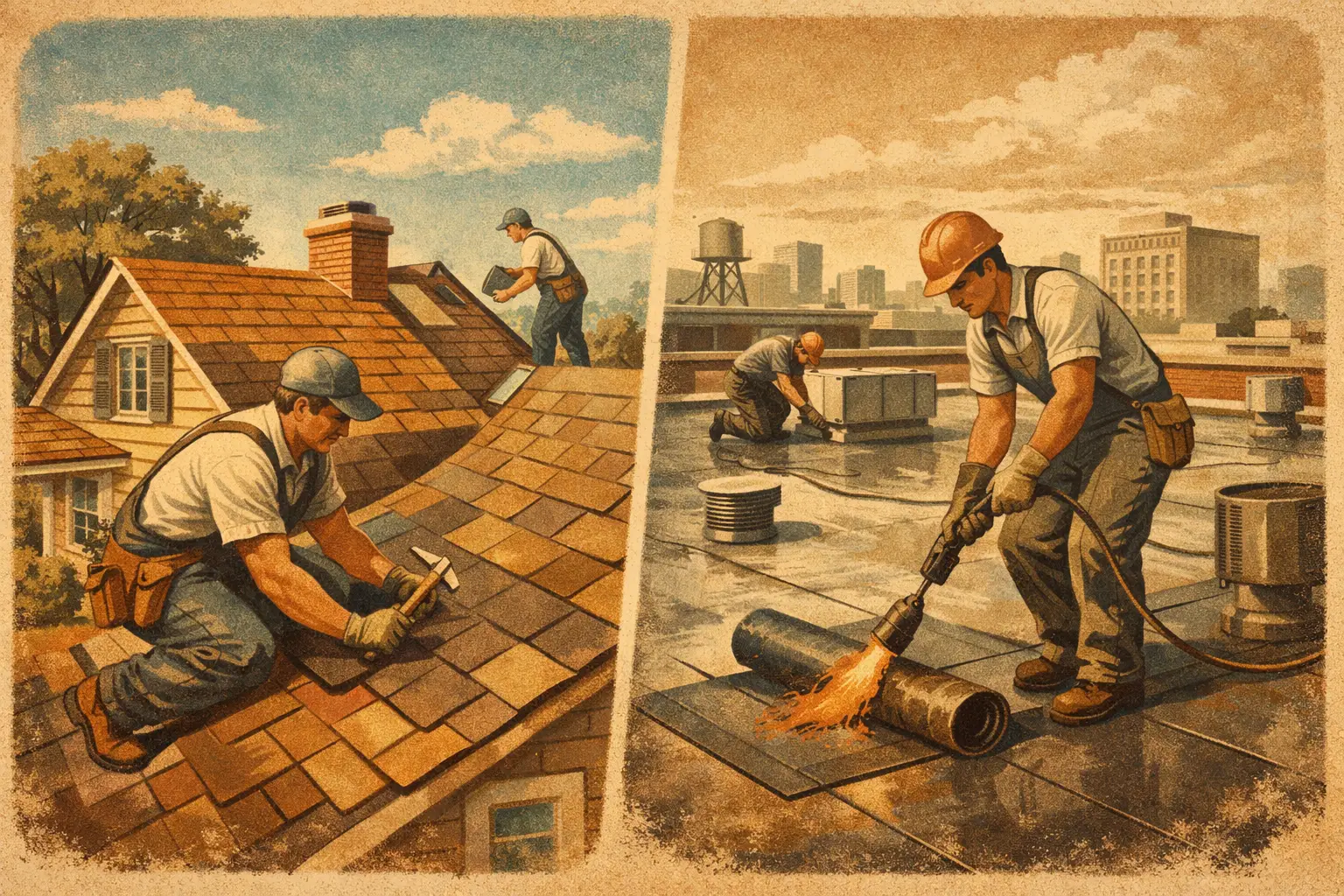
The biggest difference is usually the roof’s design. Most homes have steep-sloped roofs that shed water and snow quickly. Commercial buildings often have low-slope or nearly flat roof systems, which require carefully designed drainage and membrane protection to keep water from pooling.
A residential roof is commonly visible from the street, so appearance is a practical part of the decision. Shingle color, profile, and how the roof works with siding, gutters, and trim can all affect curb appeal. A commercial roof may not be as visible, but performance is no less important. Its system must protect a larger surface area while handling rooftop equipment, penetrations, drainage points, and regular service traffic.
The property type alone does not tell the whole story. A large custom home may have complex rooflines, multiple valleys, skylights, and steep sections that require detailed planning. A small office building may have a straightforward low-slope system. The right solution depends on the roof’s pitch, age, condition, building use, drainage, and exposure to Black Hills weather.
Roof Shape Changes How Water Is Managed
Steep residential roofs are designed to move water down to the gutters and away from the foundation. That makes gutters, downspouts, flashing, and ice management important parts of the entire exterior system. If water is not directed safely away from the home, it can contribute to siding damage, basement moisture, foundation concerns, and landscape erosion.
Low-slope commercial roofs need water to travel toward drains, scuppers, or edge drainage systems. Even shallow ponding can put stress on a roof membrane and expose weak seams or flashing details. A commercial roof replacement should account for drainage from the beginning, not treat it as an afterthought once the roofing material is installed.
Materials Are Chosen for Different Jobs
Asphalt shingles are a common residential choice because they offer dependable protection, familiar appearance, and a range of colors and styles. Depending on the home and owner goals, metal roofing may also be considered for its longevity, snow-shedding ability, and distinct look.
Commercial roof systems often use materials such as TPO, EPDM, PVC, modified bitumen, or metal. These systems are selected based on roof slope, building use, insulation needs, foot traffic, chemical exposure, drainage, and budget. A restaurant, warehouse, retail space, and multifamily building can all have different roofing needs, even when their roofs appear similar from the ground.
Material selection should never come down to the lowest initial price alone. A roof that costs less upfront but needs frequent repair, struggles with drainage, or disrupts operations can become the more expensive choice over time.
Installation Planning Looks Different Too
A residential roofing project is personal. Crews work close to living spaces, landscaping, vehicles, pets, and daily family routines. Clear communication matters, from explaining where materials will be placed to making sure nails and debris are removed from the property. An organized job site helps protect the home and gives the homeowner confidence throughout the work.
Commercial work requires another level of coordination. Roofing crews may need to work around customer entrances, delivery areas, tenant schedules, parking lots, HVAC equipment, and safety requirements. In some cases, the work may be phased so that a business can stay open or tenants can continue using the building with minimal disruption.
A commercial project also may involve more detailed planning for access, staging, material movement, and protection of the interior. If a roof is over offices, retail inventory, or occupied apartments, preventing moisture intrusion during construction is a serious responsibility. That is why a contractor’s process and communication are as important as the roofing material itself.
Maintenance Needs Depend on the System
Every roof benefits from regular inspection, especially after hail, wind, or a season of heavy snow. However, the maintenance focus changes between residential and commercial properties.
For a home, an inspection may look for missing or damaged shingles, exposed nail heads, cracked pipe boots, loose flashing, granule loss, gutter blockage, and signs of leaks in the attic or ceiling. Homeowners should also watch for water stains, sagging gutters, or shingle pieces around the yard. These signs do not always mean a full replacement is needed, but they should be checked before the damage spreads.
For commercial properties, maintenance often centers on seams, roof penetrations, drains, flashings, membrane condition, and areas where water collects. Rooftop HVAC units and other equipment create additional points that need attention. Small defects on a low-slope roof can allow water to travel beneath the membrane, making the visible stain inside the building much smaller than the actual affected area.
Property managers often benefit from a routine inspection schedule rather than waiting for a leak. Planned maintenance can help document roof condition, identify repair needs early, and support more accurate budgeting for eventual replacement.
Cost Is More Than the Price Per Square Foot
It is natural to compare roofing estimates, but a fair comparison requires more than looking at the bottom line. Roof size, slope, tear-off requirements, material type, decking repairs, flashing details, ventilation, insulation, drainage work, and access all affect the final cost.
Residential estimates may also include gutters, fascia, siding repairs, or other exterior work needed to protect the home as a complete system. Commercial estimates may account for specialized materials, insulation layers, rooftop equipment details, safety planning, and the need to keep a site accessible during construction.
The best estimate should clearly explain what work is included and what conditions could affect the scope. If a contractor finds damaged decking or hidden moisture after removing old materials, that should be communicated promptly and documented clearly. Honest communication is especially valuable when a roof investment cannot wait for perfect timing.
When Repair Makes Sense and When Replacement Is Better
A targeted repair can be a sensible choice when damage is limited and the remaining roof life is still strong. Replacing a few wind-damaged shingles, repairing flashing around a vent, or addressing a localized membrane issue may restore protection without requiring a full replacement.
Replacement becomes more practical when repairs are recurring, materials are near the end of their service life, storm damage is widespread, or the existing system has ongoing drainage or ventilation problems. For a commercial property, repeated leaks can threaten operations and tenant relationships. For a home, ongoing repairs can create frustration and leave hidden moisture damage unaddressed.
An experienced inspection should explain the condition of the roof in plain language. Property owners deserve to know whether repair is a reasonable solution, what risks remain, and why replacement may or may not be the better investment.
Choosing a Contractor for Your Property Type
Whether you own a home, manage a rental property, or operate a business, look for a contractor with experience in the type of roofing system you need. Ask how the crew will protect the property, manage cleanup, communicate changes, and handle weather delays. For commercial work, ask how the project will be organized around operations, tenants, and public access.
Local experience matters in the Black Hills. A roofing plan should account for wind exposure, hail risk, snow loads, ice, and fast-changing weather. Good Guys Exteriors brings more than 35 years of combined experience to residential and commercial exterior projects, with a focus on organized work sites and clear communication from inspection through completion.
A roof is not simply a layer of material on top of a building. It is the system that helps protect the people, work, memories, and investments underneath it. The right path starts with a careful look at your specific property, then a solution built to serve it well for years to come.